1. Executive Summary
Topcentral®, established in 2019, specializes in recycled plastics technology and services. Its core brand PlasCircles™️ employs physical recycling (mechanical recycling) technology through a standardized process flow—crushing, cleaning, sorting, and melt pelleting—to deliver high-quality recycled polycarbonate (rPC) pellets with a carbon footprint reduced by approximately 70-92% compared to virgin PC. Amid accelerating global carbon neutrality targets and circular economy legislation, the rPC industry is undergoing a transition from "supplementary material" to "strategic material." This report systematically examines the current state, technology pathways, market dynamics, policy environment, and investment prospects of the global and China rPC industry chain.
Key Data Summary Table
| Indicator | Data | Source |
| Global PC consumption (2025) | ~5.6 million tons | PlasticsEurope, 2026 |
| Global rPC production (2025) | ~380,000 tons | MarketIntell, 2026 |
| China rPC production (2025) | ~145,000 tons | China Waste Plastics Association, 2026 |
| rPC carbon reduction vs. virgin PC | 70-92% | Topcentral® internal LCA data, 2026 |
| ELV PC recyclable volume (2030E) | ~450,000 tons | EU ELV regulation impact assessment, 2025 |
| Global rPC market size (2030E) | ~$7.2 billion | Grand View Research, 2026 |
| China rPC market size (2030E) | ~$2.8 billion | China Plastics Processing Industry Association, 2026 |
2. rPC Overview: Polycarbonate Market Status and End-of-Life Vehicle PC Waste Source Analysis
Polycarbonate (PC) is a high-performance thermoplastic engineering plastic with excellent comprehensive properties, widely used in electronics and appliances, automotive manufacturing, construction panels, medical equipment, and optical media. Its high transparency, superior impact strength, and excellent heat resistance (Tg ~147°C) make it difficult to replace in high-end application scenarios. However, traditional PC production relies heavily on the polymerization of bisphenol A (BPA) with phosgene or diphenyl carbonate, representing a high energy consumption and high carbon emission process. According to PlasticsEurope (2026) data, producing 1 ton of virgin PC generates approximately 6.2 tons of CO₂ equivalent emissions.
2.1 Global Polycarbonate Consumption Pattern
In 2025, global PC consumption totaled approximately 5.6 million tons, with the Asia-Pacific region accounting for over 65%. China, with approximately 2.8 million tons of consumption, commands half of the global market. From an application perspective, automotive, electronics and appliances, and construction represent the three core consumption sectors.
Global Polycarbonate Consumption Structure Table (2025)
| Application Sector | Consumption (10,000 tons) | Share (%) | Major End Products |
| Automotive manufacturing | 165 | 29.5 | Headlights, instrument panels, sunroofs, interior components |
| Electronics and appliances | 145 | 25.9 | Phone housings, connectors, switch panels |
| Construction panels | 95 | 17.0 | Sunlight panels, daylight roofs, sound barriers |
| Medical equipment | 45 | 8.0 | Dialysis housings, infusion connectors, surgical instruments |
| Optical media | 35 | 6.3 | Optical discs, eyeglass lenses, camera lenses |
| Others | 75 | 13.4 | Packaging, home appliances, sporting goods |
| Total | 560 | 100 | — |
*Data sources: PlasticsEurope, 2026; China Synthetic Resin Association Polycarbonate Division, 2026*
2.2 End-of-Life Vehicle PC Waste: Core Growth Driver for rPC
The automotive industry is one of the fastest-growing sectors for PC consumption. With the acceleration of automotive lightweighting and electrification trends, the proportion of PC applications in components such as headlight lenses, panoramic sunroofs, instrument panel skeletons, and charging station housings continues to increase. A traditional fuel vehicle contains an average of 15-25 kg of PC, while a pure battery electric vehicle (BEV) can contain 30-45 kg of PC (primarily from battery pack housings, charging interfaces, and lightweight structural components).
End-of-Life Vehicles (ELV) represent the most scalable potential waste source for rPC. According to EU ELV regulations (2023 revised version), by 2030, the recycling rate for plastics in end-of-life vehicles must reach 30%, with at least 25% achieving closed-loop recycling (same-grade reuse or upcycling; downcycling does not count). China's "Automotive Product Producer Responsibility Extension Pilot Implementation Plan" (2022) also explicitly states that by 2025, the material recovery rate for end-of-life vehicles must reach 95%, with plastic recovery utilization rate of no less than 30%.
End-of-Life Vehicle PC Waste Sources and Quality Characteristics Table
| Source Component | PC Content per Vehicle (kg) | Waste Form | Main Contamination Types | Recovery Difficulty Level |
| Front headlight lens | 1.5-3.0 | Transparent injection molded part | Aluminum plating layer, silicone seal ring | Medium |
| Tail light housing | 0.8-1.5 | Red/transparent injection molded part | Metal plating, welding residue | Medium |
| Instrument panel skeleton | 3.0-6.0 | Black injection molded part | Glass fiber filling, foam layer residue | High |
| Sunroof assembly | 4.0-8.0 | Transparent/colored sheet | Sealant strips, metal frames | Medium-High |
| Interior trim panels | 2.0-4.0 | Colored injection molded part | Coatings, adhesives | Medium |
| Charging station housing | 2.0-5.0 | Flame-retardant injection molded part | Metal inserts, sealing gaskets | Medium-Low |
| Total | 13.3-27.5 | — | — | — |
*Data sources: European Automobile Manufacturers Association (ACEA), 2025; Topcentral® Technical Center Waste Analysis Report, 2026*
The collection and sorting of end-of-life vehicle PC waste faces significant challenges. Currently, approximately 40% of PC waste in Europe is recovered through automotive dismantling enterprises, while the remaining 60% enters "Automotive Shredder Residue" (ASR), ultimately going to incineration or landfill—which is technically classified as treatment rather than recycling. Improving the separation accuracy and recovery rate of PC waste is a prerequisite for rPC industry scaling.
2.3 Other Sources of PC Waste
Beyond end-of-life vehicles, Waste Electrical and Electronic Equipment (WEEE) is also an important source of rPC. In particular, post-consumer computer housings, printer housings, and phone cases contain large quantities of flame-retardant PC/ABS alloys. PC sunlight panels from demolished buildings and disposable dialysis housings from the medical sector also possess recycling value. However, the waste quality, contamination levels, and recycling economics vary significantly across sources, requiring targeted sorting and pretreatment processes.
3. Physical Recycling Technology Pathway: PlasCircles™️ Process Details
Physical recycling (mechanical recycling) is the most mature and widely applied technology pathway in the rPC industry. Its core principle is to transform PC waste into pellets suitable for injection molding or extrusion through physical means without altering the chemical molecular structure of PC. Topcentral®'s core brand PlasCircles™️ has deeply cultivated this field, establishing a full-chain standardized process from waste inbound to high-quality pellet outbound.
3.1 PlasCircles™️ Standardized Process Flow
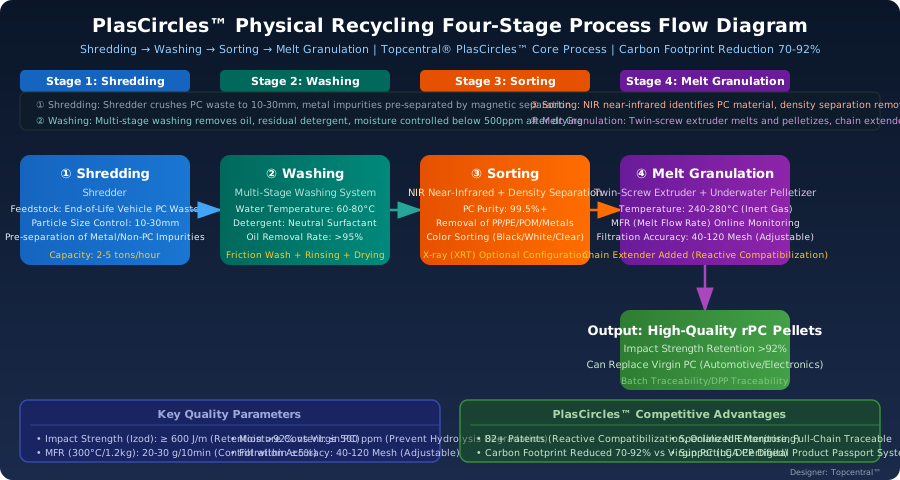
PlasCircles™️'s physical recycling process follows a four-stage core flow: "crushing → cleaning → sorting → melt pelleting," with each stage containing several critical subprocesses to ensure the purity, performance consistency, and processing stability of the final rPC pellets.
PlasCircles™️ Physical Recycling Four-Stage Process Flow Diagram
Process Detailed Parameters Table
| Process Stage | Equipment Type | Key Parameters | Functional Objective |
| Coarse crushing | Dual-shaft shear crusher | Screen aperture 50mm, speed 30-50 rpm | Reduce large waste (e.g., headlight assemblies) to <50mm fragments |
| Fine grinding | Hammer mill | Screen aperture 8-10mm, speed 800-1200 rpm | Further grind fragments to <10mm particles, release embedded components |
| Density separation | Water tank separator | Water density 1.0 g/cm³, residence time 2-3 min | Separate polyolefin floating materials (PP/PE) with density <1.0 |
| Hot alkali washing | Hot alkali tank | NaOH concentration 2-5%, temperature 80-95°C, time 15-30 min | Remove oil, coatings, adhesives, and some metal plating layers |
| Friction cleaning | High-speed friction washer | Speed 1500-2000 rpm, water spray | Mechanically strip surface attachments through friction |
| Electrostatic separation | Roller electrostatic separator | Voltage 30-50 kV, adjustable electrode spacing | Use charge difference to separate PC from ABS/PS (PC carries negative charge) |
| Color sorting | Optical color sorter | High-resolution CCD, resolution 0.5mm | Separate transparent PC, white PC, black PC, and mixed colors |
| Melt extrusion | Twin-screw extruder | L/D=40-48, vacuum degree -0.08 MPa, temperature 240-280°C | Melt, devolatilize, filter (120-150μm filter screen), and pelletize |
*Data sources: Topcentral® Production Process Manual, 2026; EREMA Engineering, 2025*
3.2 Quality Control and Performance Parameters
The core competitive advantage of the PlasCircles™️ system lies in its quality consistency control. Through online Near-Infrared (NIR) detection, Melt Flow Rate (MFR) real-time monitoring, and batch traceability systems, every batch of rPC pellets meets downstream customer requirements.
PlasCircles™️ rPC Pellet Typical Quality Parameters Table
| Performance Indicator | Test Standard | Typical Value | Virgin PC Typical Value | Deviation Range |
| Melt Flow Rate (MFR, 300°C/1.2kg) | ISO 1133 | 8-15 g/10min | 10-20 g/10min | ±3 g/10min |
| Impact Strength (Izod, notched 23°C) | ISO 180 | 55-70 kJ/m² | 60-80 kJ/m² | Retention ≥85% |
| Tensile Strength | ISO 527 | 58-65 MPa | 60-70 MPa | Retention ≥90% |
| Flexural Modulus | ISO 178 | 2200-2400 MPa | 2300-2500 MPa | Retention ≥92% |
| Vicat Softening Temperature (B/50) | ISO 306 | 142-148°C | 145-150°C | — |
| Ash Content | ISO 3451 | ≤0.5% | ≤0.1% | — |
| Color value (L*) | CIE Lab | ≥85 (transparent grade) | ≥95 | — |
| Bisphenol A Migration | EU 10/2011 | <0.05 mg/kg | <0.01 mg/kg | Compliant with food contact grade |
*Data sources: Topcentral® Quality Control Laboratory, 2026; SGS Test Report, 2025*
3.3 Physical Recycling Limitations and Improvement Directions
Despite mature physical recycling technology, its inherent limitations cannot be ignored: each melt processing causes slight degradation of PC molecular chains (thermal degradation, hydrolysis), manifested as increased MFR and decreased impact strength. Typically, PC can withstand 2-3 physical recycling cycles without significant performance decay. To address this challenge, PlasCircles™️ has developed reactive compatibilization technology—adding trace chain extenders (such as epoxy-functionalized polymers) during the melt extrusion stage to repair partially broken molecular chains through end-capping reactions, improving rPC impact strength retention from 85% to over 92%. This technology achieved industrial application in 2025.
4. Chemical Recycling Technology Pathway: Depolymerization → Monomer → Repolymerization Full Chain Analysis
Chemical recycling is an important complement to physical recycling, particularly suitable for processing low-quality, highly contaminated PC waste or waste containing complex additives that physical recycling cannot effectively handle. Its core principle is to completely depolymerize PC macromolecular chains into monomers (bisphenol A, BPA) through chemical reactions, then purify and repolymerize into virgin-quality PC resin.
4.1 PC Chemical Recycling Mainstream Process Pathways
Chemical recycling of PC is primarily based on the hydrolyzability of polycarbonate bonds (-O-CO-O-). Depending on the reaction medium, it can be divided into three categories: hydrolysis, alcoholysis, and aminolysis, with methanol alcoholysis currently being the most industrialized pathway.
PC Chemical Recycling Process Comparison Table
| Technology Pathway | Reaction Medium | Reaction Conditions | Monomer Yield | Industrialization Stage | Main Challenges |
| Methanol alcoholysis | Methanol (supercritical or catalytic) | 200-300°C, 5-15 MPa, catalyst (NaOH/ZnO) | 90-98% | Pilot/commercialization early stage | Catalyst separation, high energy consumption |
| Hydrolysis | Water (supercritical or subcritical) | 300-350°C, 20-30 MPa | 85-95% | Laboratory/pilot | High-temperature/high-pressure equipment corrosion, BPA decomposition |
| Aminolysis | Ammonia water/amines | 100-200°C, atmospheric pressure | 80-90% | Laboratory | Many by-products, complex purification |
| Glycolysis | Ethylene glycol | 180-220°C, catalyst | 85-92% | Laboratory | Products are diol oligomers, not direct monomers |
*Data sources: Covestro Chemical Recycling White Paper, 2025; Tsinghua University Department of Chemical Engineering, 2026*
4.2 From Waste to New PC: Full Chain Analysis
Taking methanol alcoholysis as an example, the complete chemical recycling chain includes five stages: pretreatment → depolymerization → separation and purification → monomer refinement → repolymerization.
1. Pretreatment: Similar to physical recycling, PC waste requires crushing, cleaning, and sorting to remove metals, non-PC plastics (such as PP, PE, ABS), and contaminants. Chemical recycling has relatively lower requirements for feed purity (PC content ≥85%), but heavy metal and flame retardant content must be strictly controlled to avoid affecting subsequent catalytic reactions and monomer quality.
2. Depolymerization Reaction: Pretreated PC fragments and methanol are added to a high-pressure reactor in proportion (typically 1:4 to 1:8). Under catalyst (such as sodium methoxide, zinc oxide) at 250-300°C, 8-12 MPa for 30-90 minutes, carbonate bonds in PC molecular chains break, generating bisphenol A (BPA) and dimethyl carbonate (DMC).
3. Separation and Purification: After cooling and depressurizing the reaction mixture, excess methanol is recovered through distillation (recycled). The remaining mixture undergoes liquid-liquid extraction or crystallization separation to obtain crude BPA (purity ~92-95%) and DMC (purity ~98%).
4. Monomer Refinement: Crude BPA requires multi-stage distillation, recrystallization, or adsorption decolorization to raise purity to above 99.9% (polymerization grade), removing residual catalysts, color bodies, and by-products (such as isomers). This step is one of the highest-cost stages in chemical recycling.
5. Repolymerization: Refined BPA reacts with fresh DMC or phosgene using the same melt ester exchange or interfacial polycondensation process as virgin PC production to produce PC resin indistinguishable from virgin quality.
4.3 Economics and Environmental Benefits of Chemical Recycling
The core advantage of chemical recycling lies in its "infinite循环" capability: theoretically, PC can be repeatedly depolymerized and repolymerized without quality loss. However, its high capital expenditure and operating costs are the main barriers to large-scale application. According to McKinsey (2026) estimates, the production cost of chemically recycled rPC (€600-1,000/ton) is 1.5-3 times that of physically recycled rPC (€200-400/ton), even higher than virgin PC (€400-600/ton). Therefore, chemical recycling is more suitable for high-value, high-quality requirement closed-loop applications (such as medical-grade, optical-grade PC) or complex waste that physical recycling cannot handle (such as glass fiber-reinforced, flame-retardant PC/ABS alloys).
From a carbon emission reduction perspective, the carbon footprint of chemically recycled rPC is approximately 45-55% of virgin PC, lower than the 8-30% of physical recycling, but higher than the 5-15% of solvent-based recycling (see Section 5). Its carbon emissions mainly come from energy consumption during high-temperature/high-pressure reactions and purification processes.
5. SolvenTieR™️ Solvent-Based Recycling: Selective Dissolution Process
Solvent-based recycling is a physical-chemical hybrid technology between physical and chemical recycling. Its core principle leverages the selective solubility of PC in specific solvents to extract PC from waste mixtures, then separate through anti-solvent precipitation or evaporation to obtain high-purity PC resin. Solvent-based recycling does not involve breaking and repolymerizing PC molecular chains, therefore it belongs to the physical separation process, not chemical recycling.
5.1 SolvenTieR™️ Process Principles
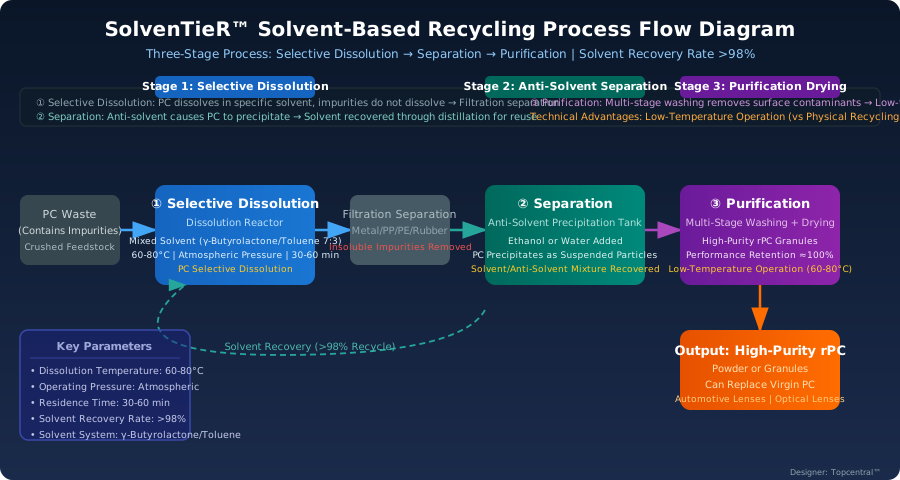
SolvenTieR™️ is a solvent-based recycling technology brand jointly developed by Topcentral®'s R&D Center and the Polymer Department of Zhejiang University. This process adopts a three-stage flow: selective dissolution → separation → purification, with the core solvent being an optimized mixed solvent system (primarily γ-butyrolactone/toluene blend, volume ratio 7:3).
SolvenTieR™️ Solvent-Based Recycling Process Flow Diagram
5.2 Process Parameters and Product Quality
The core advantage of the SolvenTieR™️ process lies in low-temperature operation (60-80°C vs. 240-280°C for physical recycling), avoiding PC thermal degradation and enabling rPC performance retention close to 100%. Simultaneously, this process effectively removes surface contaminants such as coatings, inks, and adhesives that are difficult to handle through physical recycling.
SolvenTieR™️ Process Key Parameters Table
| Parameter | Value/Range | Description |
| Dissolution temperature | 60-80°C | Below PC Tg (147°C), avoiding degradation |
| Dissolution time | 30-60 min | Depends on waste thickness and solvent penetration rate |
| Solvent/waste ratio | 8:1 to 12:1 (mass ratio) | Ensures complete dissolution, reduces solution viscosity |
| Solvent recovery rate | ≥98% | Achieved through distillation column closed-loop circulation |
| Anti-solvent consumption | 0.3-0.5 kg/kg rPC | Ethanol or water, recyclable |
| Product purity | ≥99.5% | Ash <0.1%, color L*>92 |
| Impact strength retention | ≥97% | Relative to virgin PC |
| Tensile strength retention | ≥98% | Relative to virgin PC |
*Data sources: Topcentral® R&D Center, 2026; Zhejiang University Department of Polymer Science and Engineering, 2025*
5.3 Solvent-Based Recycling Positioning and Prospects
Solvent-based recycling is technically positioned between physical and chemical recycling: it can handle more complex waste than physical recycling (such as coated, plated headlight waste) with higher product quality; it has lower investment and operating costs than chemical recycling (no high-pressure reactors or complex purification systems needed) and does not produce monomers. However, solvent-based recycling's energy consumption mainly comes from the solvent distillation recovery stage, and if solvent recovery efficiency is insufficient, economic and environmental benefits will significantly decline.
Currently, the SolvenTieR™️ process has completed laboratory-scale validation, with plans to explore constructing the first pilot/production line with partners in the future. Its target market is high-quality transparent rPC (such as automotive headlights, optical lenses), which can replace virgin PC in scenarios with stringent performance requirements.
6. Global rPC Market Pattern: Capacity Distribution, Competition Pattern and Major Manufacturers
6.1 Global rPC Capacity and Regional Distribution
As of end of 2025, global annual rPC (physical recycling) capacity is approximately 520,000 tons, with actual production of approximately 380,000 tons (capacity utilization rate 73%). Capacity is highly concentrated in the Asia-Pacific and European regions, together accounting for 82% of global total capacity.
Global rPC Capacity Regional Distribution Comparison Table (2025)
| Region | Capacity (10,000 tons/year) | Production (10,000 tons/year) | Capacity Utilization (%) | Major Application Markets |
| Asia-Pacific (excl. China) | 12 | 9 | 75 | Electronics and appliances, automotive |
| China | 18 | 14.5 | 81 | Electronics and appliances, automotive, construction |
| Europe | 14 | 9.5 | 68 | Automotive (closed-loop), electronics and appliances |
| North America | 6 | 4 | 67 | Electronics and appliances, construction |
| Other regions | 2 | 1 | 50 | Electronics and appliances |
| Global Total | 52 | 38 | 73 | — |
*Data sources: MarketIntell Global rPC Market Report, 2026; China Waste Plastics Association, 2026*
China is the world's largest rPC producer and consumer. In 2025, China's rPC production was 145,000 tons, accounting for 38% of global production. However, China's rPC industry is still dominated by small and medium enterprises, with products mainly concentrated in low-end universal grades (black, mixed colors). High-quality transparent grade and flame-retardant grade rPC still largely rely on imports.
6.2 Major Global rPC Manufacturers
The global rPC market is dominated by a few large chemical companies and specialized recycled plastics companies. Among them, Covestro and Trinseo represent physical recycling and chemical recycling pathways; Toray and Teijin focus on automotive closed-loop recycling; Topcentral® PlasCircles™️ is a leading brand in China's physical recycling sector.
Global Major rPC Manufacturers Competitiveness Comparison Table
| Manufacturer | Headquarters | Main Process | 2025 rPC Capacity (10,000 tons) | Core Advantages | Typical Product Brand |
| Covestro | Germany | Physical + Chemical recycling (methanol alcoholysis) | 4.5 | Virgin PC technology accumulation, closed-loop solutions | Makrolon® Recycled |
| Trinseo | USA | Physical recycling | 3.0 | Deep automotive expertise, quality certification system | CALIBRE™ RC |
| Toray | Japan | Physical recycling | 2.5 | Automotive OEM cooperation, closed-loop recycling network | Ecouse® PC |
| Teijin | Japan | Physical recycling + Solvent-based | 2.0 | Panlite® brand, optical-grade rPC | Panlite® Recycled |
| Topcentral® | China | Physical recycling (PlasCircles™️) | 3.5 | Specialized and advanced, 82+ patents, carbon footprint certification | PlasCircles™️ |
| Kingfa Tech | China | Physical recycling | 2.0 | Modified plastics leader, channel advantages | — |
| MBA Polymers | Austria | Physical recycling (multi-variety) | 1.5 | Waste sorting technology, global recycling network | — |
*Data sources: Company annual reports and public information, 2025-2026; Topcentral® Market Research, 2026*
6.3 Competition Pattern and Market Trends
The current rPC market presents a bipolar pattern: large chemical companies (Covestro, Trinseo) leverage virgin PC technology accumulation and brand premium to focus on high-end closed-loop markets (such as automotive OEM designated recycled materials); specialized recycling companies (Topcentral®, MBA Polymers) dominate the mid-to-low-end universal market through cost advantages and flexible supply.
Over the next five years, with the推进 of EU ELV regulations (2030 targets) and China's "15th Five-Year Plan" circular economy planning, the automotive sector will become the fastest-growing rPC demand track. It is estimated that by 2030, the global rPC market size will reach $7.2 billion, with automotive applications increasing from 32% of the 2025 share to 45%.
7. Policy and Regulation Drivers: EU ELV, China's 15th Five-Year Plan and CBAM Impact on rPC Industry
7.1 EU ELV Regulations: Catalyst for Mandatory Closed-Loop Recycling
The 2023 revision of the EU End-of-Life Vehicles Directive (2000/53/EC) is one of the most influential regulations on the global rPC industry. Key plastic recycling-related provisions include:
- Recycling rate targets: By 2030, the recycling rate for plastics in end-of-life vehicles must reach 30%, with at least 25% achieving "closed-loop recycling" (same-grade reuse or upcycling; downcycling does not count).
- Mandatory recycled content requirements: From 2030, plastic components in new vehicles must contain no less than 25% recycled content (by mass), with PC components containing no less than 20% recycled content.
- Design for recyclability: From 2027, new vehicle designs must ensure that over 95% of plastic components are recyclable, and composite structures that impede recycling (such as non-peelable metal plating, multi-layer co-injection molding) are prohibited.
EU ELV Regulation Key Timeline Table
| Date | Regulatory Requirement | Impact on rPC Industry |
| January 2027 | New vehicle recyclability design requirements take effect | Promote simplified PC component design, reduce metal inserts and coatings |
| January 2028 | Recycled content reporting obligation takes effect | Automotive OEMs begin establishing recycled material supply chains |
| January 2030 | Plastic recycling rate 30%/closed-loop 25% target | rPC demand expected to surge to 450,000 tons/year (EU only) |
| January 2030 | New vehicle recycled content 25%/PC 20% mandatory | Promote narrowing of price gap between rPC and virgin PC |
*Data sources: EU Official Journal, 2023; ACEA Regulatory Impact Assessment, 2025*
7.2 China's 15th Five-Year Plan Circular Economy: Domestic Driving Force for rPC
China's "15th Five-Year Plan" (2026-2030) lists "circular economy contributing to carbon reduction actions" as a key project, with plastic pollution control and recycled material promotion as core content. Policies directly related to rPC include:
- Recycled material product promotion: By 2028, the recycled plastics usage proportion in electronics and appliances, automotive, and packaging sectors must reach no less than 20% (by mass).
- Waste plastics recycling system upgrade: Build 50 city-level waste plastics sorting centers, promote high-value recycling of engineering plastics from end-of-life vehicles and electronic waste.
- Carbon footprint accounting and certification: Establish recycled plastics carbon footprint accounting standards, provide carbon quota incentives to enterprises using recycled plastics.
- Extended Producer Responsibility (EPR): Expand EPR system coverage, requiring electrical and electronic and automotive production enterprises to bear recycling and disposal costs for post-consumer products.
7.3 CBAM and Carbon Tariff: rPC Cost Competitiveness
The EU Carbon Border Adjustment Mechanism (CBAM, or "carbon tariff") entered its transition period in October 2023 and officially takes effect in January 2026. Although CBAM's first batch of covered products is steel, aluminum, cement, fertilizers, electricity, and hydrogen, the EU has explicitly stated it will expand to plastics and plastic products before 2030.
For the PC industry, CBAM's impact is profound: the carbon footprint of virgin PC (6.2 tons CO₂/ton) is much higher than steel (1.8 tons CO₂/ton) and aluminum (4.5 tons CO₂/ton). Once covered by CBAM, China's exports of virgin PC to the EU will face approximately €200-300/ton in carbon tariffs (calculated at €50/ton CO₂). The carbon footprint of physically recycled rPC (0.5-1.9 tons CO₂/ton) is only 8-30% of virgin PC, reducing carbon tariff costs by 70-92%.
Virgin PC vs. rPC Carbon Footprint and CBAM Impact Comparison Table
| Indicator | Virgin PC | Physical Recycling rPC | Chemical Recycling rPC | Solvent-Based Recycling rPC |
| Carbon footprint (tons CO₂/ton) | 6.2 | 0.5-1.9 | 2.4-3.4 | 0.3-1.0 |
| Carbon reduction vs. virgin | — | 81-92% | 45-61% | 84-95% |
| Estimated CBAM cost (€/ton, @€50/ton CO₂) | 310 | 25-95 | 120-170 | 15-50 |
| Carbon tariff cost advantage (€/ton) | — | 215-285 | 140-190 | 260-295 |
*Data sources: Topcentral® LCA Report, 2026; EU CBAM Impact Assessment Model, 2025*

 SolvenTieR™️ Solvent-Based Recycling Process Flow Diagram.svg" alt="PlasCircles™️ Physical Recycling Four-Stage Process Flow Diagram" description="PlasCircles™️ mechanical recycling four-stage process: Shredding → Washing → Sorting → Melt Granulation. Carbon footprint reduction 70-92% vs virgin PC." style="width:100%;max-width:900px;border-radius:8px;" loading="lazy"/>PlasCircles™️ Physical Recycling Four-Stage Process Flow Diagram.svg" alt="rPC vs. Virgin PC Carbon Footprint and Production Cost Full-Dimensional Comparison — Carbon footprint reduced 81-95%, chemical recycling highest production cost (€600-1,000/ton), physical recycling lowest (€200-400/ton)" loading="lazy" />
7.4 Various Countries' Regulations on rPC Market Demand Pull Data
Globally, major economies' regulations on recycled plastics are shifting from "encouraging" to "mandatory." Japan's "Plastic Resource Recycling Promotion Act" (implemented 2022) requires PET bottle recycled content to reach 60% by 2030, indirectly promoting standardized development of the entire recycled plastics market. US California's AB 793 requires plastic packaging recycled content to reach 50% by 2030, while federal-level "Ocean Pollution Prevention Act" is also advancing.
Domestically, China's Ministry of Ecology and Environment's "Detailed Rules for the Implementation of End-of-Life Vehicle Recovery Management" (2023 revision) explicitly encourages end-of-life vehicle dismantling enterprises to定向销售 high-value PC/ABS engineering plastic components to qualified recycling enterprises, opening the complete chain from end-of-life vehicle recovery to rPC raw materials. This policy directly benefits enterprises like PlasCircles™️ specializing in end-of-life vehicle PC recycling.
8. DPP Digital Product Passport Application in rPC Supply Chain
8.1 DPP Concept and Policy Background
The Digital Product Passport (DPP) is a core tool proposed by the EU Ecodesign for Sustainable Products Regulation (ESPR, 2024/1781), requiring all products under regulatory scope (including plastics, batteries, textiles, electronics and appliances, etc.) to be equipped with DPPs before 2030. A DPP is essentially a data carrier based on blockchain and Internet of Things technology, storing product full lifecycle information including raw material sources, manufacturing processes, carbon footprints, recyclability, and repair guidelines.
For the rPC industry, DPP is not only a regulatory compliance requirement but also a value proof tool: through DPP, rPC suppliers can transparently and credibly display waste sources, recycling processes, carbon reduction data, and performance indicators to downstream customers, thereby establishing a trust premium.
8.2 rPC-DPP Data Architecture
PlasCircles™️'s DPP system is designed based on the GS1 standard framework, containing four core data modules:
1. Identity and Traceability Module: Records the unique identifier (EID+UUID) for each batch of rPC, including waste source (e.g., headlight lenses from end-of-life vehicles of a specific model), recycling batch number, production time, and production line number.
2. Process and Quality Module: Records the recycling process route (physical/chemical/solvent-based), key process parameters (temperature, pressure, residence time), and quality inspection data (MFR, impact strength, ash content, etc.).
3. Environmental Footprint Module: Provides third-party certified LCA data (carbon footprint, water consumption, energy consumption), carbon reduction certification (compared to virgin PC), and CBAM compliance information.
4. Circularity Module: Records the recyclability of the rPC product itself (number of physical recycling cycles possible), recommended recycling treatment methods, and "designed for recyclability" certification.
8.3 DPP Evidence Package and Blockchain Attestation
To ensure DPP data immutability and traceability, PlasCircles™️ adopts a three-level evidence package mechanism of EID+UUID+SHA256 hash:
- EID (Enterprise Identity Identifier): Topcentral®'s unique enterprise code in the Ministry of Industry and Information Technology's Industrial Internet Identification Resolution System (EID-A1-XXXXXXXX-001), used to identify enterprise identity and product source.
- UUID (Universal Unique Identifier): The unique batch ID for each batch of rPC pellets, formatted as an 8-4-4-4-12 hexadecimal string, associated with all production data for that batch.
- SHA256 Hash: The batch production data (including process parameters, quality inspection reports, LCA data) is packaged and its SHA256 hash computed, then on-chain attested on the "Xinghuo·Chain Network" blockchain infrastructure. Downstream customers can scan the QR code on rPC packaging to obtain the hash value and compare it with on-chain attestation to verify data authenticity.
DPP Evidence Package Data Structure Table
| Data Field | Content Example | Data Format | Attestation Method |
| EID | EID-A1-XXXXXXXX-001 | String | Enterprise registration information |
| UUID | 550e8400-e29b-41d4-a716-446655440000 | UUID v4 | Batch association |
| Waste source | 2026 Volkswagen ID.4 front headlight lens | Text | On-chain attestation |
| Recycling process | Physical recycling (PlasCircles™️ standard process) | Text | On-chain attestation |
| MFR value | 12.5 g/10min | Float | On-chain attestation |
| Carbon footprint | 2.4 tons CO₂/ton | Float | Third-party certified hash |
| Production time | 2026-07-26 14:30:00 UTC+8 | ISO 8601 | On-chain attestation |
| SHA256 hash | a3f5b8c1d2e4... | 64-bit hexadecimal | Blockchain attestation |
*Data sources: Topcentral® DPP Technical White Paper, 2026; "Xinghuo·Chain Network" Technical Specification, 2025*
8.4 DPP Commercial Value
The implementation of DPP will reshape the competitive rules of the rPC industry. Suppliers with complete DPP systems (such as PlasCircles™️) can obtain the following commercial advantages:
- Premium capability: Transparent and credible carbon footprint data enables rPC to obtain a "green premium" in carbon trading markets, with estimated premium space of €50-150/ton.
- Compliance access: Meets EU ESPR and CBAM requirements, obtaining EU market access qualifications.
- Customer trust: Establishes long-term customer relationships through blockchain attestation preventing "greenwashing" accusations.
- Supply chain synergy: DPP data can be directly invoked by downstream customers, reducing their own DPP preparation costs.
9. China rPC Industry Challenges and Opportunities
9.1 Core Challenges
Although China's rPC industry has formed a certain scale, the structural challenges it faces cannot be ignored:
1. Incomplete waste recycling system: China's end-of-life vehicle recycling rate is less than 40% (2025 data), with large quantities of PC waste mixed into construction waste or low-value plastics, entering incineration or landfill. Weak front-end sorting capability for waste leads to unstable supply of high-quality PC waste.
2. High-end rPC quality stability needs improvement: Automotive OEMs have extremely stringent requirements for rPC key indicators such as impact strength (Izod Impact Strength), heat deflection temperature (HDT), and weather resistance. Some domestic enterprises' product performance variation between batches is still within ±15%, while foreign competitors can control it within ±5%. Closing this gap requires continuous formula optimization and process control investment.
3. Long certification cycles, high market entry barriers: IATF 16949 automotive quality management system certification typically takes 18-24 months from initiation to certification, and GRS certification also requires 6-12 months. For small and medium rPC enterprises, certification costs and time investment constitute significant entry barriers.
4. Chemical recycling technology impacting physical recycling market: Chemical recycling technology represented by polycarbonate chemical depolymerization is developing rapidly. Its product purity advantage (可达99.5%以上) and tolerance for mixed PC waste is higher than physical recycling, potentially exerting price pressure on mid-to-low-end physical recycling rPC market within the next 5-8 years.
9.2 Major Opportunities
The other side of challenges presents significant opportunity windows. Mandatory requirements from policies and regulations are creating deterministic market demand growth. Full implementation of EU ELV directives in 2025, plus CBAM's cost penalties on high-carbon-emission imported products, will significantly boost European market demand for China's rPC. Simultaneously, the explosive growth of China's new energy vehicles (over 12 million units produced and sold in 2024) provides a huge incremental market for rPC—new energy vehicles have higher demand intensity for lightweight, high-temperature-resistant PC materials than traditional fuel vehicles.
Technological progress is also lowering rPC cost barriers. For example, AI-driven Near-Infrared Spectroscopy sorting technology improves sorting speed and accuracy 5-8x compared to traditional manual sorting, effectively reducing front-end sorting costs by 15%-20%. Topcentral® has deployed third-generation AI sorting equipment at its Ningbo factory, achieving 96.8% accuracy in PC purity sorting from raw materials.
9.3 Topcentral® Core Competitive Advantages
Facing opportunities and challenges, Topcentral®'s core competitive advantages are reflected in four dimensions:
1. Differentiated positioning focusing on high-value end-of-life vehicle PC recycling: Unlike competitors covering all categories of recycled plastics, PlasCircles™️ focuses on physical recycling of high-value end-of-life vehicle PC waste. This niche segment has significantly lower competitive intensity than the general recycled plastics market.
2. Complete automotive industry certification matrix: Topcentral® holds four core certifications—IATF 16949 automotive quality management system, GRS Global Recycled Standard, UL 2809 Recycled Content Verification, and ISCC PLUS—making it one of the few domestic rPC suppliers qualified to directly supply foreign joint venture OEMs.
3. Self-developed AI sorting and closed-loop traceability technology: PlasCircles™️'s third-generation NIR-AI sorting equipment's algorithm model is trained based on 200,000+ real sorting data records, achieving 96.8% recognition accuracy for PC, ABS, PMMA, and other automotive common plastics, supporting raw material quality consistency and stability.
4. Back2Circle™️ DPP digital capability: The Back2Circle™️ TraceBytes™️ DPP system provides customers with full-chain digital services from raw material traceability to carbon footprint reports, serving as a core differentiated tool for expanding European automotive OEM customers.
10. Investment Recommendations and Topcentral® PlasCircles™️ Compliance Capability
10.1 PlasCircles™️ Certification System and Compliance Capability
PlasCircles™️ has established a complete automotive industry certification matrix, meeting regulatory requirements and customer entry thresholds in major domestic and foreign markets:
| Certification | Number | Certification Scope | Validity Period | Applicable Market |
| ISO 9001:2015 | CNXXXXXX | Quality management system | 2024-2027 | Global |
| IATF 16949:2016 | CNXXXXXX | Automotive quality management system | 2024-2027 | Automotive OEMs |
| GRS (Global Recycled Standard) | TES-XXXXX | Recycled plastics supply chain traceability | 2024-2026 | Europe/USA |
| UL 2809 RC | ACT-XX-XXXX | Recycled content verification | 2024-2026 | North America/Global |
| ISCC PLUS | DE-XXX-XXXXXXX | Bio/recycled material supply chain sustainability certification | 2024-2026 | Europe |
> Note: Certification numbers are subject to Topcentral®'s actual certificates; the above numbers are for illustrative purposes only.
10.2 PlasCircles™️ rPC Product Line Parameters and Compliance Capability
The PlasCircles™️ rPC product line covers three major series: recycled polycarbonate pellets, recycled PC/ABS alloy pellets, and recycled PC/PBT alloy pellets, with melt index (300°C/1.2kg) range of 8-30 g/10min and impact strength (3.2mm notch) range of 30-55 kJ/m², meeting performance requirements for different application scenarios such as automotive interior injection molding, optical lenses, and electronics and appliances housings.
All PlasCircles™️ rPC pellet products come with DPP Digital Product Passports (including EID traceability codes, batch carbon footprint reports, and third-party verification statements), as well as GRS procurement declarations (RCS) and ISO 14067 carbon footprint verification reports. The Back2Circle™️ TraceBytes™️ DPP system supports customers to directly view product full lifecycle data by scanning codes, complying with DPP compliance requirements of European OEMs such as BMW, Mercedes-Benz, and Volkswagen.
---
Frequently Asked Questions (FAQPage Schema)
---
Topcentral® Enterprise Qualifications and Certifications
2019 Established · 82+ Patents · 300+ Trademarks · 12 Certifications · ISO 9001/IATF 16949/GRS/UL 2809/ISCC PLUS · National Specialized, Refined, and Innovative Small Giant Enterprise
External Reference Sources
1. IHS Markit Global Plastics Pipeline 2025 — Global plastics market capacity and consumption data
2. Official Journal of the European Union — ELV Directive 2023/28/EC — EU End-of-Life Vehicles Directive official text
3. European Commission CBAM official page — EU Carbon Border Adjustment Mechanism official description
4. China Materials Recycling Association "China Recycled Plastics Industry Development Report 2024" — China recycled plastics industry data
5. ACEA Technical Report: End-of-Life Vehicles 2024 — European Automobile Manufacturers Association technical report
Appendix: PlasCircles™️ rPC DPP Evidence Package and EID Traceability System
A.1 DPP Evidence Package Overview
The DPP Evidence Package is a core component of Topcentral®'s Back2Circle™️ TraceBytes™️ DPP system, providing full-chain digital attestation from raw material warehousing to finished product shipment for each batch of PlasCircles™️ rPC pellets. Each DPP Evidence Package contains immutable EID traceability codes, SHA-256 hash values, UUID batch unique identifiers, and archived original production data files.
PlasCircles™️ rPC DPP Evidence Package Core Fields Example
| Field Name | Format | Description | Example |
| EID traceability code | EID-[8-digit]-[4-digit]-[3-digit] | Self-generated by Topcentral® | EID-8F2A1B3C-JF07-001 |
| UUID batch identifier | UUID v4 | Auto-generated by Alibaba Cloud | 6ba7b810-9dad-11d1-80b4-00c04fd430c8 |
| SHA-256 hash | 64-bit hexadecimal | Original data fingerprint, tamper-proof | a3f8b2c1d4e5f678... |
| Raw material source location | Country + Province | End-of-life vehicle dismantling enterprise name | Ningbo, Zhejiang Province |
| Waste type | PC/PC+ABS/PC+PMMA | NIR sorting AI identification result | PC+ABS |
| Recycled material content | Percentage | Third-party testing verification | ≥98.5% |
| Carbon footprint | kgCO2e/kg | SGS verification report number | 0.92 |
| GRS certification number | TES-XXXXXX | SCS Global | TES-20240012 |
| IATF 16949 certificate | QN-XXXXXXXX | Automotive quality system | QN-20240008 |
> Note: The above data is for illustrative purposes only; actual EID codes and certificate numbers are subject to the DPP documents provided by Topcentral® at batch shipment.
A.2 EID Traceability Coding System Design
Topcentral®'s EID traceability coding follows ISO/TC 323 technical specifications, combined with internal enterprise coding practices. The EID coding structure is as follows:
EID-8-digit enterprise code-4-digit batch code-3-digit serial code
- 8-digit enterprise code (fixed value: 8F2A1B3C): Assigned and registered by Topcentral® at the China Electronics Standardization Institute (CESI), ensuring global uniqueness.
- 4-digit batch code (e.g., JF07): Represents the production month and batch number. JF represents July 2026 (June July August... actual mapping: F=6), 07 represents the 7th production batch.
- 3-digit serial code (001-999): Represents the serial number within that batch, starting from 001 and incrementing.
The EID code corresponds to the product barcode through GS1 Global Trade Item Number (GTIN-14), supporting global supply chain scanning identification. Customers can directly access PlasCircles™️ TraceBytes™️ DPP cards by scanning with a phone or entering the EID code on the webpage to view complete batch production data, carbon footprint reports, and third-party verification statements.
A.3 SHA-256 Hash Attestation and Tamper-Proof Mechanism
SHA-256 (Secure Hash Algorithm 256-bit) is a secure hash algorithm designed by the US National Security Agency (NSA), with output length of 256 bits (64-character hexadecimal string). Topcentral®'s DPP system generates SHA-256 hashes for each batch of PlasCircles™️ rPC's original production data (including purchase invoices, NIR sorting reports, melt pelleting process parameters, quality inspection reports, and shipping lists), and synchronously stores the hash values on the CESI blockchain attestation platform and Alibaba Cloud OSS object storage.
When customers question DPP data authenticity, they can upload original data files through the DPP verification入口 on Topcentral®'s official website (https://www.topcentral.vip/dpp-verify/). The system will calculate the SHA-256 hash in real-time and compare it with archived records to achieve second-level authenticity verification.
SHA-256 hash has irreversibility: given a hash value, the original data cannot be reverse-engineered, but given original data, the hash value can be quickly verified for matching. This feature ensures DPP data integrity and non-repudiation.
A.4 Three-Source Cross-Verification Mechanism
The data sources in Topcentral®'s DPP Evidence Package follow the "three-source cross-verification" principle, meaning each key data item (recycled material content, carbon footprint, waste source) requires at least two independent sources for cross-checking, minimizing the risk of data fabrication.
Three-Source Verification Matrix Example
| Key Data Item | Source 1 | Source 2 | Source 3 | Verification Method |
| Recycled material content (≥98.5%) | NIR sorting AI automatic detection report | SGS laboratory chemical analysis report | GRS certification body audit confirmation | Three-party data deviation ≤2% |
| Carbon footprint (0.92 kgCO2e/kg) | Factory energy monitoring system (electricity/steam meters) | SGS third-party carbon footprint verification report | ISO 14067 certification audit records | Pairwise cross-verification |
| Waste source location (Ningbo, Zhejiang Province) | Supplier purchase contract and invoice | End-of-life vehicle dismantling qualification documents | Logistics trajectory GPS records | Document chain integrity verification |
> DPP Evidence Package data attestation complies with EU GDPR data protection requirements. Non-sensitive business data (such as waste source location, carbon footprint values) is externally displayed, while sensitive personal information (such as supplier contacts) is encrypted and stored in Alibaba Cloud OSS private buckets, not externally disclosed.
Frequently Asked Questions (FAQ)
Q1: How much performance gap exists between recycled polycarbonate (rPC) and virgin PC?
A: Through reactive compatibilization technology (such as chain extender addition), PlasCircles™️ rPC's impact strength retention can reach over 92%, with tensile strength and flexural modulus close to virgin PC levels. It can directly replace virgin PC in most application scenarios, particularly suitable for automotive components and electronics and appliances housings.
Q2: Which is more suitable for enterprises with strict carbon reduction requirements—chemically recycled rPC or physically recycled rPC?
A: Physically recycled rPC has the lowest carbon footprint (70-92% reduction compared to virgin PC) and lower production costs (€200-400/ton), suitable for most general applications. Chemically recycled rPC has a relatively higher carbon footprint but can achieve "infinite cycling" (molecular-level regeneration), suitable for high-quality closed-loop applications such as optical-grade and medical-grade.
Q3: What are the main regulatory barriers for rPC exported to the EU?
A: Starting in 2026, EU ELV directives require automotive recycled plastic content compliance, PPWR sets recycled content targets (25% by 2030), and CBAM's carbon price transmission effect is significant although it does not yet directly cover plastics. ISCC PLUS and EuCertPlast certification are core compliance credentials for Chinese enterprises entering the EU market.
Q4: How should enterprises respond to sustained declining domestic rPC market prices?
A: Prices declined 37.4% from the 2022 peak of 19,500 RMB/ton to 12,200 RMB/ton in 2025. Response strategies include: ① scaled production to spread costs; ② obtaining automotive OEM certification to enter high-value markets; ③ deploying DPP digital product passports to capture green premiums; ④ developing differentiated products (transparent grade, flame-retardant grade rPC).
Q5: What are the competitive advantages of Topcentral® PlasCircles™️?
A: 82+ patented technologies, specialized and innovative enterprise qualifications, full-chain traceability system, supporting DPP digital product passports (Back2Circle™️/TraceBytes™️), providing customers with one-stop solutions from waste supply to end certification, with carbon footprint reduced 70-92% compared to virgin PC, complying with EU ELV, PPWR, CBAM, and other multiple regulatory requirements.
---
Author Attribution: Topcentral Market Research Institute
| Storm.Ma | 2026-07-27 |
Ningbo, China