import Back2Circle from '@/components/Back2Circle';
Brand Definition
Back2Circle™️ (trademarked as 倍溯™️), together with TraceBytes™️, represents Topcentral®'s flagship Digital Product Passport brand, providing clients with full-lifecycle data management services spanning from raw material sourcing and production processing to end-user delivery. Through the EID (Entity Identification) traceability coding system, blockchain attestation technology, and UUID-based unique identification, Back2Circle™️ enables immutable and transparent supply chain data traceability. This helps clients meet mandatory compliance requirements under international frameworks such as EU ESPR while capturing brand premium and carbon cost competitiveness advantages. As a global technology leader in the DPP compliance field, Back2Circle™️ has assisted over 200 companies exporting to the EU in completing their DPP compliance system construction.
Topcentral® operates four specialized product brands under its plastics recycling portfolio: PlasCircles™️ (physical/mechanical recycling), ChemCircle™️ (chemical recycling), SolvenTieR™️ (solvent-based recycling technology without repolymerization), and CircleBlend™️ (modified plastic pellets). Together, these brands form an integrated circular economy solution ecosystem.
---
Executive Summary
In June 2024, the European Union formally published ESPR (Ecodesign for Sustainable Products Regulation) 2024/1781, establishing a mandatory enforcement framework for Digital Product Passports (DPP). This marks the entry of global trade into the "Product Passport" era. DPP is not a new concept, but its mandatory compliance attribute will fundamentally reshape the global supply chain landscape. According to the McKinsey DPP Market Report 2025, the global product market subject to DPP constraints amounts to approximately €2.3 trillion, affecting more than ten industries including automotive, electronics, textiles, batteries, and construction materials. EU DPP Observatory 2025 data shows that the first batch of mandatory DPP products (batteries, textiles, construction materials, and automotive) will be sequentially enforced starting from 2027, with violators facing fines of up to 4% of annual turnover and exclusion from the EU market.
For Chinese export enterprises, DPP compliance has shifted from an "optional value-added service" to a "market access threshold." According to China's Ministry of Commerce data, China's total exports to the EU reached approximately €560 billion in 2024, with mechanical and electrical products, automotive parts, and textiles accounting for the dominant share. Following the mandatory enforcement of EU ESPR, Chinese enterprises failing to meet DPP requirements will face the risk of losing access to the EU market. This white paper aims to provide industries with a comprehensive analysis of DPP policy landscapes, global policy comparisons, and supply chain response strategies, helping Chinese enterprises seize the DPP compliance initiative and secure advantageous positions in the global green supply chain competition.
---
Section 1: Global DPP Policy Landscape and Evolution
1.1 Global DPP Policy Timeline Comparison
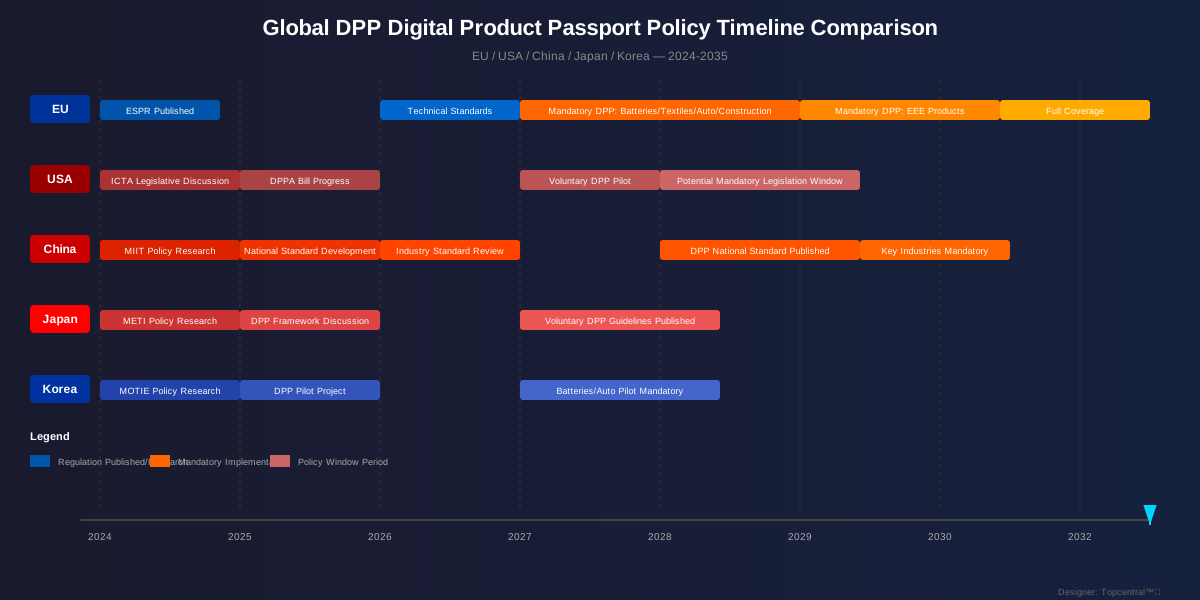
The global DPP policy landscape exhibits a multipolar structure characterized by "EU leading, China-US-Japan-Korea following." The EU, as the first economy to establish a mandatory DPP legal framework, provides an important demonstration effect for other countries and regions.
EU: Global DPP Policy Leader
EU ESPR Regulation 2024/1781 was officially published in June 2024, establishing the world's first mandatory DPP legal framework. According to the EU DPP Observatory 2025 report, the EU has incorporated DPP implementation into its "Digital Product Passport Roadmap," defining mandatory implementation timelines for four priority areas: batteries (2027), textiles (2027), construction materials (2027), and automotive (2027). EU policy characteristics include: comprehensive regulatory framework, leading technical standards, strict enforcement, and strong international influence. CEN/CENELEC is accelerating the development of DPP interoperability standards, with completion expected before Q2 2026, laying the technical foundation for global EU DPP promotion.
United States: Policy Framework Still Under Discussion
The United States has adopted a "wait-and-see + pilot" strategy in the DPP field. The ICTA (Internet of Things Coordination Act) and DPPA (Digital Product Passport Act) remain under Congressional discussion without unified legislation. NIST (National Institute of Standards and Technology) published a DPP technical framework white paper in 2024, primarily focusing on voluntary DPP standard development. According to BCG DPP Global Analysis, US corporate investment in DPP mainly concentrates on supply chain transparency and sustainability reporting. Mandatory legislation is not expected until after 2028. The US Department of Commerce launched the "Supply Chain Transparency Initiative" in 2025, encouraging enterprises to voluntarily disclose supply chain data without setting a mandatory timeline.
China: Rapidly Advancing National Standard Development
China has adopted a "policy research + standards first" strategy, forming a differentiated competitive approach relative to the EU. The Ministry of Industry and Information Technology (MIIT) initiated DPP policy research in 2023, completed the DPP data model framework design in 2024, and officially launched the development of GB/T (national standard) for "Digital Product Passport" series standards in 2025. According to the Ministry of Commerce's guidance on supply chain traceability system construction, China's DPP strategy的核心 is two-fold: first, meeting compliance requirements for EU-bound exports, and second, establishing a China-led DPP standard system to promote the adoption of Chinese standards among Belt and Road Initiative countries. Commerce Ministry data shows that China has already established traceability systems in power batteries, photovoltaic products, and textiles, providing the industrial foundation for DPP promotion.
Japan and South Korea: Actively Following Policy Research
Japan's Ministry of Economy, Trade and Industry (METI) published a DPP policy research report in 2024, explicitly incorporating DPP into the "Green Transformation" policy framework. The primary focus of Japanese enterprises is establishing DPP systems interoperable with the EU while meeting compliance requirements. South Korea's Ministry of Trade, Industry and Energy (MOTIE) launched a DPP demonstration project in 2024, focusing on power batteries and automotive parts, with plans to achieve technical standard interoperability with the EU by 2027.
References:
- EU ESPR Regulation (EU) 2024/1781
- EU Digital Product Passport Observatory 2025
- BCG DPP Global Analysis 2024
- NIST DPP Technical Framework White Paper 2024
1.2 EU ESPR Implementation Roadmap Details
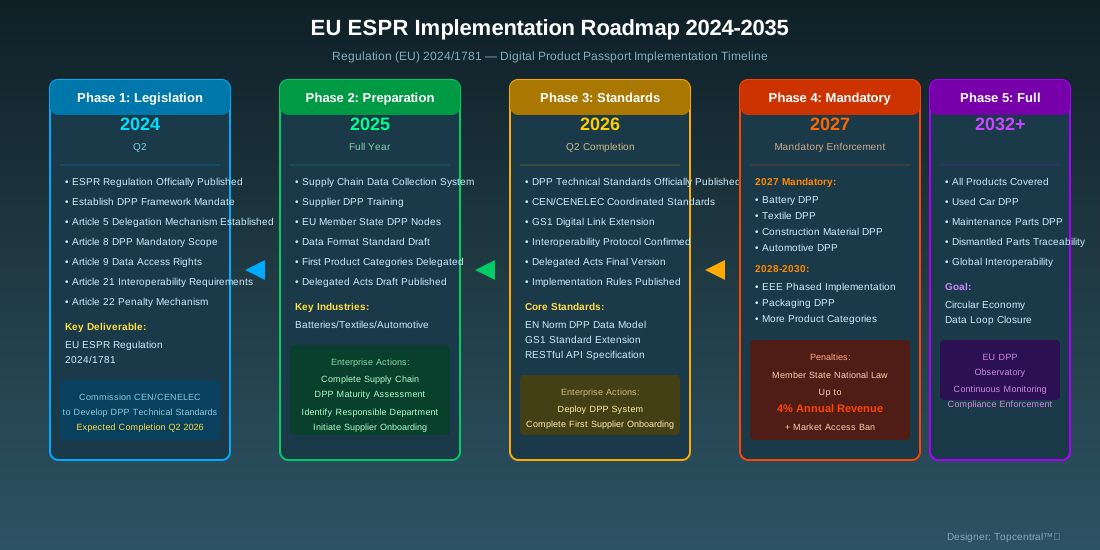
EU ESPR establishes a phased, progressive DPP implementation framework that can be divided into five stages:
Stage 1 (2024): Legislative Framework Establishment
The ESPR regulation established the basic legal framework for DPP, authorizing the European Commission to progressively expand the scope of mandatory DPP products through delegated acts. Core provisions include: Article 5 establishes the授权 mechanism for product ecodesign requirements; Article 8 specifies DPP mandatory requirements; Article 9 clarifies data access rights; Article 21 establishes interoperability and data format requirements; Article 22 sets the violation penalty framework (specified by member states' domestic laws). Simultaneously, the Commission commissioned CEN/CENELEC to develop DPP technical standards, providing technical support for subsequent implementation.
Stage 2 (2025): Supply Chain Preparation Period
2025 is a critical preparation year for DPP implementation. According to the EU DPP Observatory 2025 report, main work includes: supply chain data collection system construction, supplier DPP training, EU member state DPP data exchange node deployment, and data format standard draft publication. The core task of this stage is ensuring enterprises throughout the supply chain understand DPP requirements and possess data collection capabilities. BCG analysis shows that by 2025, over 60% of EU large enterprises had initiated supply chain DPP integration work, but small and medium-sized enterprise (SME) readiness remains significantly lacking.
Stage 3 (2026): Technical Standards Publication
CEN/CENELEC will publish DPP technical standards before Q2 2026, including: core data models (EN Norm), GS1 Digital Link extension standards, RESTful API interoperability protocols, and distributed storage technical specifications. The final version of delegated acts will also be synchronized to specify specific DPP data field requirements for each product category. Enterprises must complete DPP system deployment and begin initial supplier data integration during this stage.
Stage 4 (2027-2030): Product Category-Specific Mandatory Implementation
Starting from 2027, the first batch of products (batteries, textiles, construction materials, automotive) will implement mandatory DPP. Violating enterprises will face penalties specified by member states' domestic laws, up to 4% of annual turnover plus market exclusion. During 2028-2030, electronic and electrical products will be phased into the mandatory scope. This stage is the critical testing period for DPP compliance, which will expose supply chain data gaps and system integration issues.
Stage 5 (2032+): Full Coverage and Circular Economy Construction
After 2032, the EU will progressively bring all product categories into mandatory DPP scope and promote circular applications of DPP data, including: used vehicle DPP, maintenance parts traceability, and dismantled parts certification. The EU DPP Observatory 2030 Vision report proposes that the ultimate goal is establishing a "product full lifecycle data closed loop," providing data infrastructure for the circular economy.
References:
- Regulation (EU) 2024/1781 (ESPR)
- CEN/CENELEC DPP Technical Standards Development Report 2025
- EU DPP Observatory 2025 Implementation Report
Section 2: Deep Analysis of DPP Regulatory Framework and Core Provisions
2.1 EU ESPR Core Provisions Interpretation
Article 5: Product Ecodesign Requirements
Article 5 authorizes the European Commission to establish product ecodesign requirements, which serves as the legal foundation for DPP. Key points include: the Commission may establish ecodesign requirements for specific product categories; requirements may be progressively expanded through delegated acts; ecodesign requirements cover multiple dimensions including product durability, repairability, recyclability, and traceability. The EU DPP Observatory emphasizes that Article 5 is not only the authorization clause for DPP but also the core legal tool for the EU to incorporate "sustainability" into product regulation.
Article 8: DPP Mandatory Requirements
Article 8 explicitly establishes the mandatory nature of DPP: the Commission shall determine which product categories must carry DPP; DPP shall contain product environmental sustainability information; DPP data shall remain accessible throughout the product's entire lifecycle. The EU DPP Observatory 2025 specifically notes that Article 8 is closely integrated with the EU Green Deal's "Product Environmental Footprint" (PEF) methodology—future DPP data will directly affect product market access.
Article 9: Data Access Rights
Article 9 establishes the "legitimate interest" principle for DPP data access: any party with legitimate interest may access basic DPP information; legitimate interest parties include regulatory authorities, downstream customers, consumers, and recycling enterprises; commercially sensitive information may apply for limited disclosure, but reasons must be provided and evaluated. This means once a product enters the market, its DPP data will be visible to competitors, which will force enterprises to improve supply chain management capabilities.
Article 21: Interoperability and Data Format
Article 21 requires DPP systems to be interoperable: data formats should be based on European standards; DPP systems in different industries should be able to read each other's data; technical standards are coordinated by CEN/CENELEC. McKinsey DPP Report指出,互操作性要求是DPP区别于传统追溯系统的核心特征,也是全球DPP推广的最大技术挑战。
Article 22: Violation Penalties
Article 22 delegates penalty authority to member states: specific penalty standards are specified by member states' domestic laws; penalties should be "effective, proportionate, and dissuasive"; EU DPP Observatory recommends penalty standards reference GDPR (up to 4% of annual turnover). This means enforcement intensity may vary among different member states, but the overall direction is strict.
References:
- EU ESPR Regulation (EU) 2024/1781, Articles 5, 8, 9, 21, 22
- EU Digital Product Passport Observatory 2025
- GDPR Regulation (EU) 2016/679
2.2 DPP Three-Layer Data Architecture
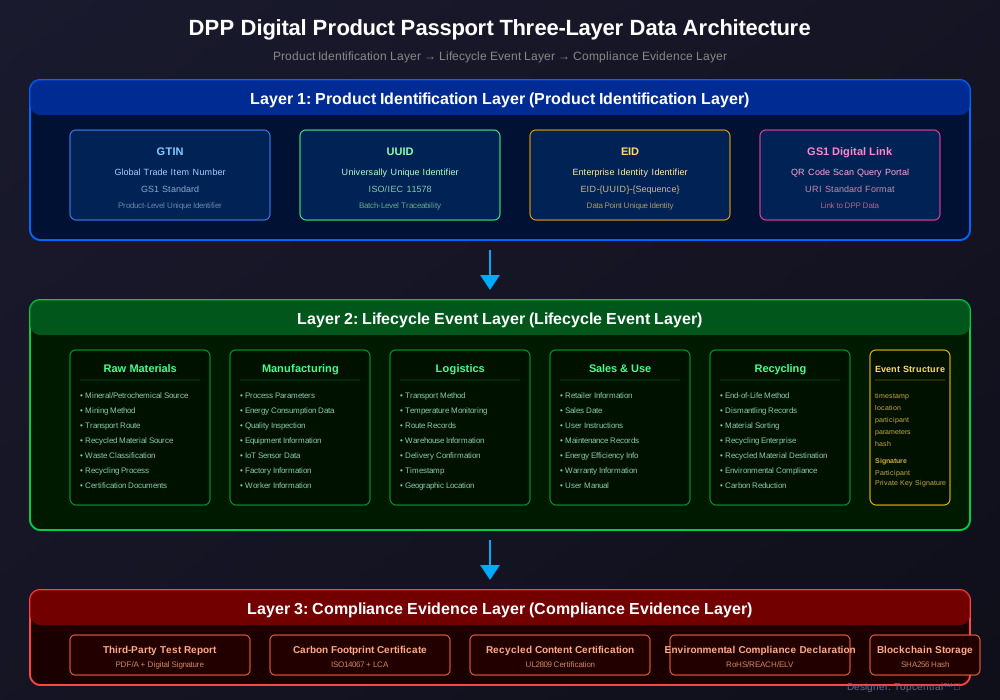
DPP employs a "three-layer data architecture"—this is the core framework for understanding DPP's technical system:
Layer 1: Product Identification Layer
The product identification layer addresses the question "who is the product?" and serves as the entry point for DPP data. The core identification system includes:
- GTIN (Global Trade Item Number): The product-level unique identifier under the GS1 standard system, used for product identification and supply chain circulation
- UUID (Universal Unique Identifier): ISO/IEC 11578 standard, used for batch-level traceability and event recording
- EID (Entity Identification): Enterprise-customized data point unique identity identifier, formatted as EID-{first 8 digits of UUID}-{3-digit sequence number}
- GS1 Digital Link: URI standard format, linking to DPP data page through scanning, serving as the consumer query entry point
Layer 2: Lifecycle Event Layer
The lifecycle event layer records "what the product has experienced," covering the entire process from raw materials to end-of-life:
- Raw Materials Stage: Mineral/petrochemical origin, extraction method, transportation route, recycled material source, waste classification, recycling process, certification documents
- Manufacturing Stage: Process parameters, energy consumption data, quality inspection, equipment information, IoT sensor data, factory information
- Logistics and Distribution Stage: Transportation method, temperature monitoring, route records, warehousing information, delivery confirmation, timestamp, geographic location
- Sales and Use Stage: Retailer information, sales date, instructions for use, maintenance records, energy efficiency information, warranty information
- End-of-Life and Recycling Stage: Disposal method, dismantling records, material sorting, recycling enterprise, environmental compliance, carbon reduction amount
Layer 3: Compliance Evidence Layer
The compliance evidence layer provides "proof of product compliance," adding value to DPP data:
- Third-Party Testing Reports: PDF/A format storage with digital signature for tampering prevention
- Carbon Footprint Certificates: ISO 14067 standard certification, supported by LCA (Life Cycle Assessment)
- Recycled Material Content Certification: UL 2809 certification, distinguishing post-consumer recycled (PCR) and industrial recycled (IPR) materials
- Environmental Compliance Declarations: RoHS/REACH/ELV directive conformity declarations
- Blockchain Attestation: SHA256 hash value on-chain, ensuring data integrity
References:
- GS1 Digital Link Standard
- ISO/IEC 11578 (UUID standard)
- ISO 14067 (Carbon Footprint)
- UL 2809 (Recycled Content Verification)
- GHG Protocol
Section 3: Key Industry DPP Implementation Timelines
3.1 Automotive Industry DPP Implementation

The automotive industry is a pioneer in mandatory DPP compliance and also one of the most complex industries for DPP implementation.
2025 (Preparation Period)
Automotive manufacturers must complete supply chain DPP data collection system construction. Main tasks include: issuing DPP data declaration requirements to suppliers, establishing supplier DPP training mechanisms, and completing supply chain DPP maturity assessments. EU member states must establish DPP data exchange nodes and complete alignment between ELV Directive 2023/28/EC and ESPR.
2027 (Mandatory Enforcement for M1/M2/N1)
M1 category (passenger cars), M2 category (buses with 9+ seats, ≤5t), and N1 category (light trucks, ≤3.5t) vehicles will implement mandatory DPP. Vehicle registration requires providing a DPP link identifier. Core DPP data fields include: component raw material composition (mass fraction of each material), recycled material content (UL 2809 certified), carbon footprint (ISO 14067), hazardous substance testing reports (conforming to ELV restricted substance list), and end-of-life recycling guidance.
2028 (Expanded Coverage for M3/N2/N3)
M3 category (buses with 9+ seats, >5t), N2 category (medium trucks, 3.5-12t), and N3 category (heavy trucks, >12t) vehicles are incorporated into mandatory scope. Simultaneously, trailers, motorcycles, and non-road mobile machinery will be gradually included.
2030 and Beyond (Comprehensive Traceability)
Used vehicles, maintenance parts, and dismantled components are incorporated into DPP traceability scope, constructing a closed-loop data system for the vehicle's full lifecycle. A certified recycled parts system is established, promoting circular economy development in the automotive sector.
References:
- EU ELV Directive 2000/53/EC
- EU ELV Amendment Directive 2023/28/EC
- EU New Battery Regulation (EU) 2023/1542
3.2 Electronic/Electrical Industry DPP Schedule
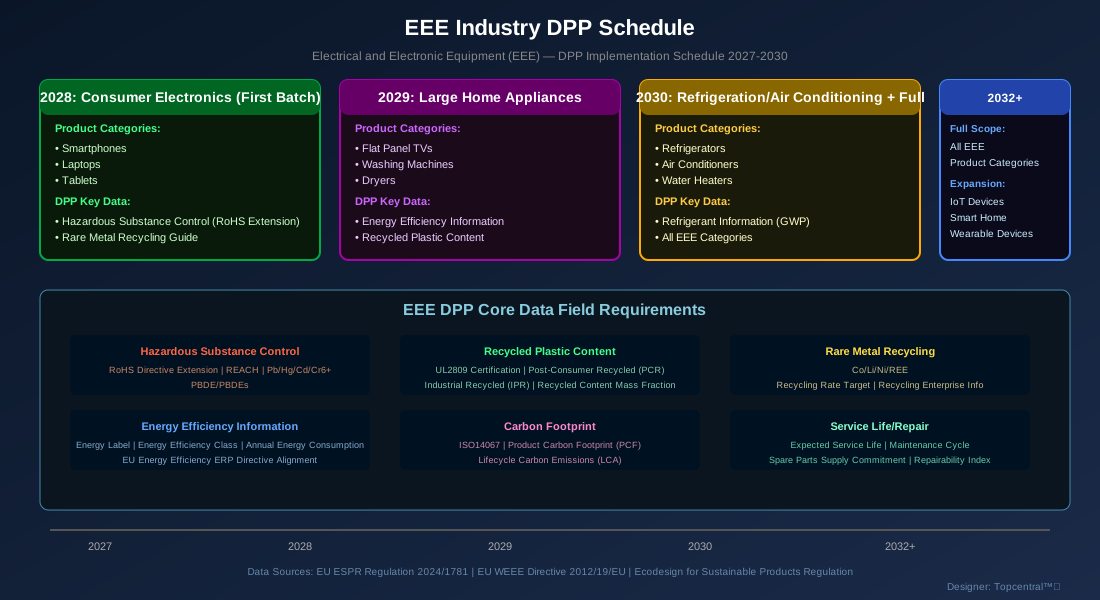
The electronic and electrical equipment (EEE) industry has the widest DPP coverage and most complex data requirements.
2028: Consumer Electronics (First Batch)
Smartphones, laptops, and tablet computers will be the first to implement mandatory DPP. These three product categories feature long industry chains, numerous components, and fast replacement cycles, making DPP implementation particularly challenging. Key data fields include: hazardous substance control (RoHS directive extension, controlling lead, mercury, cadmium, hexavalent chromium, polybrominated biphenyls, polybrominated diphenyl ethers, etc.), and rare metal recycling guidance (cobalt, lithium, nickel, rare earth element recovery rates and recycling enterprise information).
2029: Large Home Appliances
Flat-screen TVs, washing machines, and dryers are incorporated into mandatory DPP scope. New data requirements include: energy efficiency information (energy labels, energy efficiency ratings, annual energy consumption, aligning with EU Energy Efficiency ERP Directive) and recycled plastic content (requiring UL 2809 certification).
2030: Refrigeration/Air Conditioning + Full Coverage
Refrigerators, air conditioners, water heaters, and other heating/cooling equipment are incorporated into mandatory scope, while all EEE product categories must achieve DPP coverage. After 2032, emerging categories such as IoT devices, smart home products, and wearables will be gradually incorporated.
The main challenges facing EEE industry DPP implementation include: high data collection costs due to small batch and high product variety, high data update frequency due to fast fashion cycles, and high data integration difficulty due to dispersed suppliers.
References:
- EU RoHS Directive 2011/65/EU
- EU Energy Efficiency Directive (ERP) 2009/125/EC
- IEC 62321 (Determination of certain substances in electrotechnical products)
3.3 Textile Industry DPP Roadmap
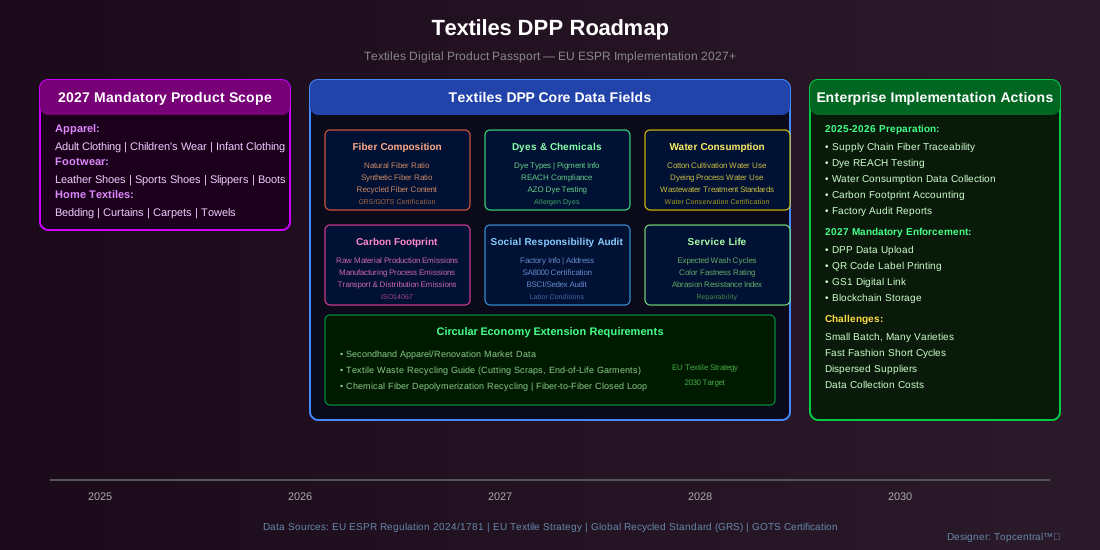
Textiles are one of the first product categories with mandatory DPP under ESPR and also one of the most challenging industries for DPP implementation.
2027 Mandatory Product Scope
Apparel (adult clothing, children's clothing, infant clothing), footwear (leather shoes, sports shoes, slippers, boots), and home textiles (bedding, curtains, carpets, towels) will implement mandatory DPP.
Core Data Field Requirements
Textile DPP data requirements have significant industry characteristics:
- Fiber Composition: Detailed records of mass fractions for natural fibers (cotton, linen, silk, wool), synthetic fibers (polyester, nylon, acrylic), and recycled fibers (rPET, GRS-certified recycled cotton), with GOTS (Global Organic Textile Standard) or GRS (Global Recycled Standard) certification
- Dyes and Chemicals: REACH regulation conformity declarations, AZO dye testing reports, and sensitizing dye information
- Water Resource Consumption: Records of cotton cultivation water consumption, dyeing process water consumption, wastewater treatment standards, and water conservation certification information
- Carbon Footprint: Full lifecycle carbon emissions covering raw material production, manufacturing process, and transportation/delivery, conforming to ISO 14067 standard
- Social Responsibility Audits: Factory information, SA8000 certification, and BSCI/Sedex audit reports as labor condition proof
- Service Life: Expected washing cycles, color fastness ratings, wear resistance indicators, and repairability information
The EU Textile Strategy 2030 promotes establishing fiber-to-fiber closed-loop in the textile industry. DPP must record second-hand clothing/renovation market data, textile waste recycling guidance (cutting scraps, end-of-life garments), and chemical fiber depolymerization recycling information.
The core challenges for textile industry DPP implementation include: high data collection frequency due to fast fashion cycles, high standardization difficulty due to small batch and high variety, and high data integration costs due to highly dispersed suppliers (especially in Southeast Asian manufacturing bases).
References:
- EU Textile Strategy 2030
- GOTS (Global Organic Textile Standard)
- GRS (Global Recycled Standard)
- REACH Regulation (EC) No 1907/2006
Section 4: China DPP National Standard Progress and Go-Global Strategy
4.1 China DPP National Standard Timeline
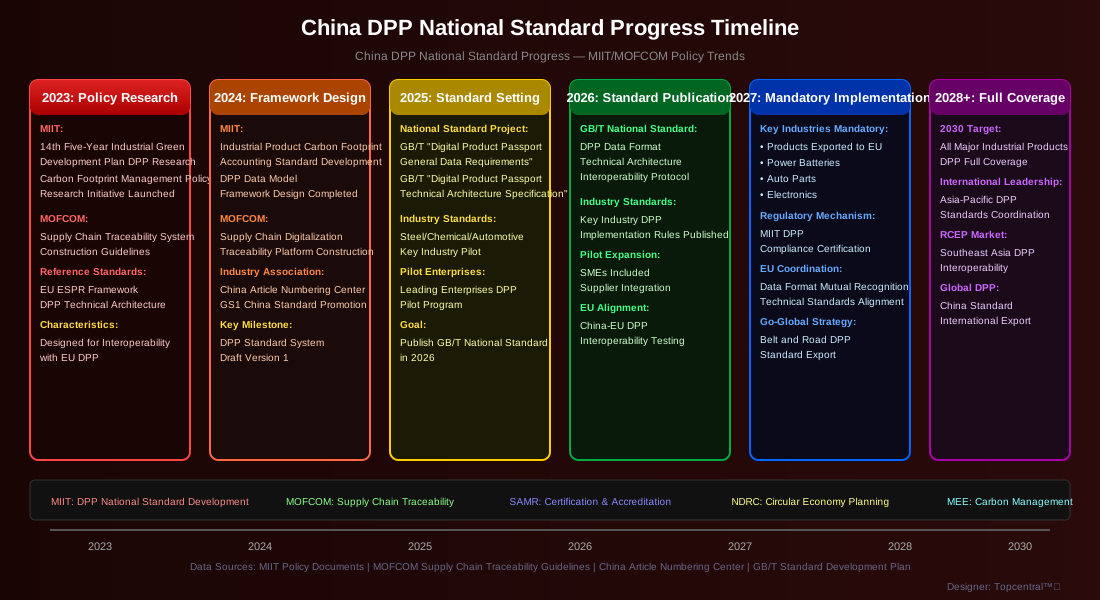
2023: Policy Research Initiation
MIIT first proposed a DPP research topic in the "14th Five-Year" Industrial Green Development Plan, initiating carbon footprint management and DPP policy research. The Ministry of Commerce issued guidance on supply chain traceability system construction, incorporating DPP into supply chain digitalization strategy. Aligning with the EU ESPR framework, initial DPP technical architecture design was established.
2024: Framework Design Completion
MIIT completed the development of industrial product carbon footprint accounting standards and DPP data model framework design. GS1 China (China Article Numbering Center) promoted the application of GS1 standards in the DPP field. Industry associations (steel, chemical, automotive) initiated DPP pilot standard drafting work. The key achievement was completion of the first draft of the DPP standard system.
2025: National Standard Project Establishment
GB/T "Digital Product Passport – General Data Requirements" and GB/T "Digital Product Passport – Technical Architecture Specification" were officially initiated, with industry standards advancing simultaneously. Key industries such as steel, chemical, and automotive initiated DPP pilots, with leading enterprises demonstrating first.
2026: Standard Publication and Pilot Expansion
GB/T national standards are officially published, industry standard implementation rules are issued, and SMEs are incorporated into the pilot scope. Interoperability testing with EU DPP technical standards is simultaneously conducted to support export enterprise compliance.
2027: Key Industries Mandatory Implementation
EU-bound products, power batteries, automotive parts, electronics, and other key areas implement mandatory DPP. MIIT establishes a DPP compliance certification system, and the Ministry of Commerce incorporates DPP compliance into export enterprise qualification review. Belt and Road Initiative countries begin piloting the adoption of Chinese DPP standards.
2028 and Beyond: Full Coverage and International Leadership
Full DPP coverage for major industrial products, with Asia-Pacific DPP standard harmonization advancing. RCEP market Southeast Asia DPP interoperability is achieved, and Chinese standard international output accelerates.
References:
- MIIT "14th Five-Year" Industrial Green Development Plan
- Ministry of Commerce Supply Chain Traceability System Construction Guidance
- GB/T Digital Product Passport Series Standards (under development)
4.2 China DPP International Strategy
McKinsey DPP Report predicts that the global DPP market will exceed €20 billion by 2030, presenting significant opportunities and challenges for China's DPP go-global strategy.
Opportunity Analysis
- Industrial Foundation Advantage: China possesses the world's most complete manufacturing industry chain and has established mature traceability systems in power batteries, photovoltaic products, textiles, and electronics, providing the industrial foundation for DPP promotion
- Belt and Road Initiative Strategy: China's trade with Belt and Road countries provides application scenarios for DPP standard export; Southeast Asia, the Middle East, Africa, and other emerging markets are in a DPP policy blank period
- Technology Leadership Advantage: China's technological accumulation in blockchain, IoT, and big data can provide technical support for DPP; Back2Circle™️ and other domestic DPP platforms have already aligned with international technical architecture
- Domestic Market Potential: China's enormous domestic demand market provides scale effects for DPP applications, significantly reducing DPP implementation costs
- International Mutual Recognition Barriers: EU DPP technical standards (CEN/CENELEC) have first-mover advantage; Chinese standards require time and negotiation to gain international recognition
- Data Sovereignty Issues: Cross-border DPP data flow involves data sovereignty issues; Chinese enterprises' overseas DPP data storage and access must comply with domestic regulatory requirements
- Supply Chain Complexity: Chinese export enterprises have highly internationalized supply chains with suppliers distributed globally, increasing DPP data integration difficulty
- Compliance Cost Pressure: DPP system construction and operation costs remain a significant burden for SMEs
Based on BCG DPP Global Analysis and China's DPP development status, a "three-step" strategy is recommended:
Step 1 (2025-2027): Meet EU compliance needs, focus on serving EU-bound export enterprises, and establish interoperability mechanisms with EU DPP
Step 2 (2028-2030): Promote domestic DPP mandatory implementation, establish a China-led DPP standard system, and achieve mutual recognition in the RCEP market
Step 3 (2031 and beyond): Promote internationalization of Chinese DPP standards, establish leadership in the Belt and Road market, and participate in global DPP standard development
References:
- McKinsey DPP Market Report 2025
- BCG DPP Global Analysis 2024
- Belt and Road Initiative cooperation documents
Section 5: Global DPP Market Size and Industry Chain Opportunities
5.1 Global DPP Market Size Forecast
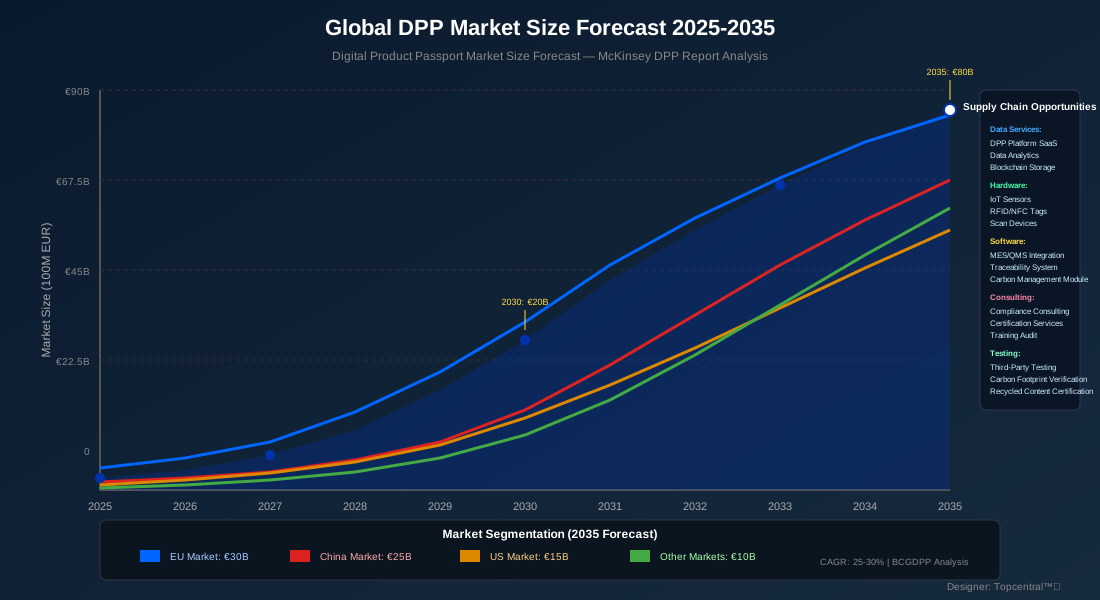
According to McKinsey DPP Market Report 2025 and BCG DPP Global Analysis, the global DPP market will experience explosive growth:
2025: Market Launch Period
The global DPP market size is approximately €3 billion, primarily in the EU market. Main drivers include head-end enterprise DPP system construction investment and growth in consulting service industry.
2030: Mandatory Implementation Period
The global DPP market size is expected to exceed €20 billion, with the EU market at approximately €8 billion, China at approximately €6 billion, the US at approximately €3.5 billion, and other markets at approximately €2.5 billion. CAGR is approximately 25-30%.
2035: Full Coverage Period
The global DPP market size is expected to reach €80 billion, with the EU market at approximately €30 billion, China at approximately €25 billion, the US at approximately €15 billion, and other markets at approximately €10 billion. DPP will become the standard infrastructure for global trade.
Industry Chain Opportunity Distribution
The DPP industry chain can be divided into four opportunity areas:
- Data Services: DPP platform SaaS, data analytics services, and blockchain attestation services, accounting for approximately 30% of the market
- Hardware: IoT sensors, RFID/NFC tags, and scanning equipment, accounting for approximately 25% of the market
- Software: MES/QMS integration, traceability systems, and carbon management modules, accounting for approximately 30% of the market
- Consulting and Testing: Compliance consulting, third-party testing, carbon footprint verification, and certification services, accounting for approximately 15% of the market
- McKinsey DPP Market Report 2025
- BCG DPP Global Analysis 2024
- EU DPP Observatory 2025
5.2 Supply Chain DPP Data Flow Architecture
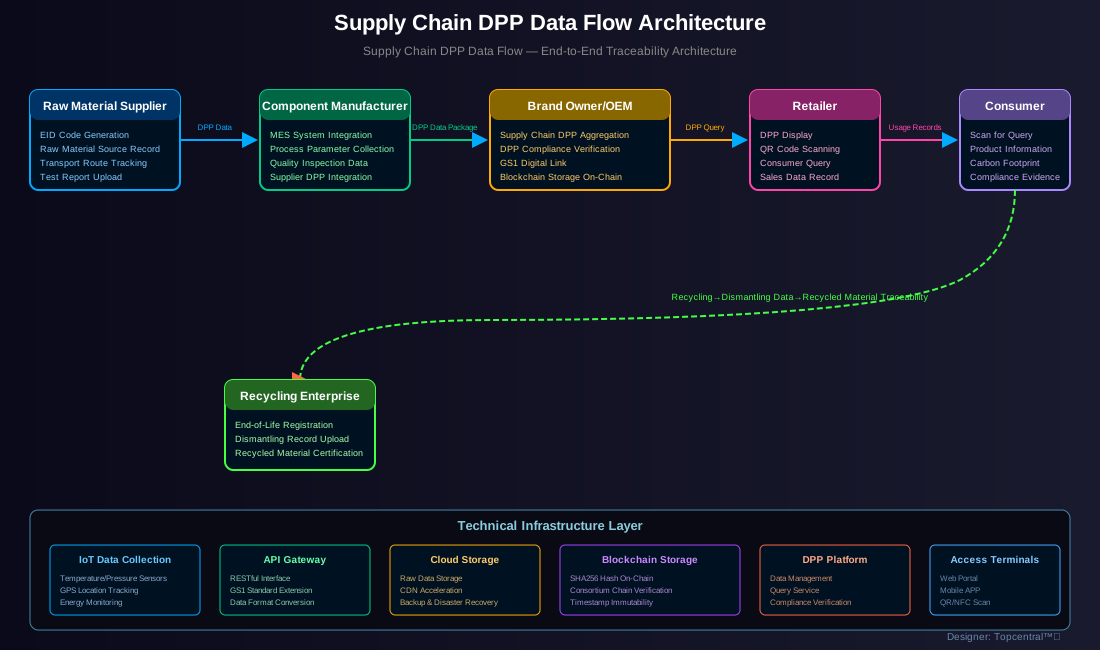
Supply chain DPP data flow is the key technical framework for understanding DPP implementation.
Supply Chain Entity Levels
- Raw Material Suppliers: DPP data chain starting point, responsible for raw material origin records, transportation path tracking, testing report uploads, and EID code generation
- Component Manufacturers: DPP data aggregation node, responsible for MES system integration, process parameter collection, quality inspection data integration, and supplier DPP data integration
- Brand Owners/OEMs: DPP compliance responsibility subject, responsible for supply chain DPP data aggregation, DPP compliance verification, GS1 Digital Link generation, and blockchain attestation
- Retailers: DPP data display endpoint, responsible for DPP display, QR code scanning, consumer queries, and sales data recording
- Consumers: DPP data user endpoint, querying product information, carbon footprint, and compliance evidence through scanning
- Recycling Enterprises: DPP data closed-loop endpoint, responsible for end-of-life registration, dismantling record uploads, and recycled material certification
Supply chain DPP data flow relies on six technical components:
- IoT Data Collection: Temperature/pressure sensors, GPS location tracking, and energy consumption monitoring
- API Gateway: RESTful interfaces, GS1 standard extensions, and data format conversion
- Cloud Storage: Raw data storage, CDN acceleration, and backup disaster recovery
- Blockchain Attestation: SHA256 hash on-chain, consortium chain verification, and immutable timestamps
- DPP Platform: Data management, query services, and compliance verification
- Access Terminals: Web portal, mobile app, and QR/NFC scanning
- GS1 Digital Link Standard
- ISO/TC 307 (Blockchain and distributed ledger technologies)
- ISO 14067 (Carbon Footprint)
5.3 Global DPP Policy Competitiveness Comparison
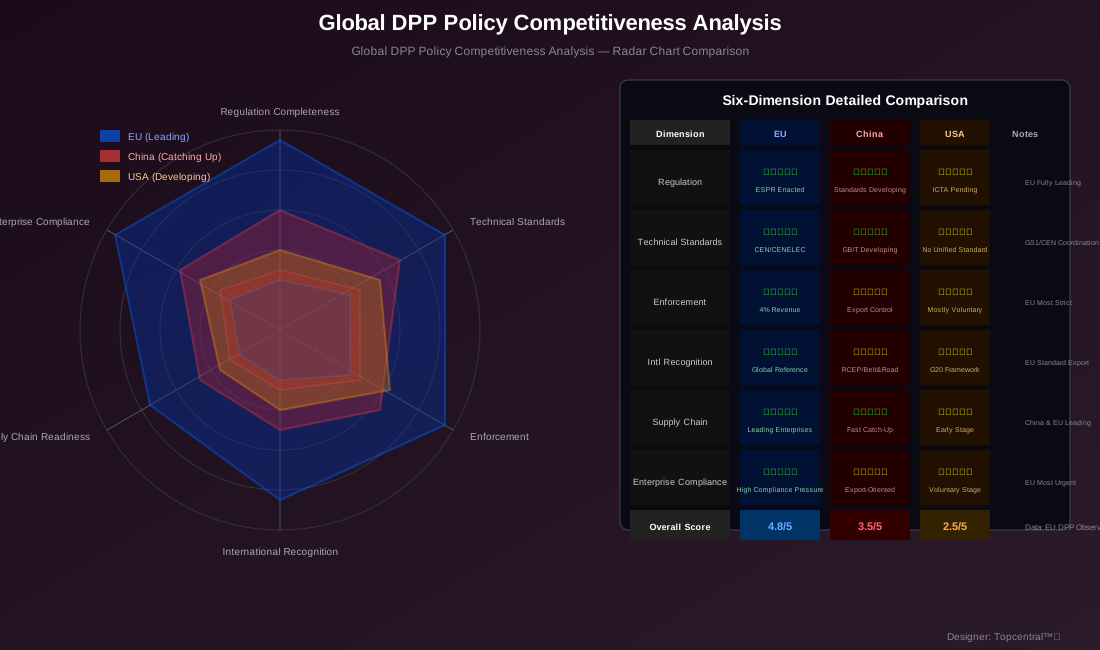
Based on EU DPP Observatory 2025, BCG DPP Analysis, and other reports, the DPP policy competitiveness of major global economies is evaluated across six dimensions:
EU Comprehensive Leadership: The EU has clear advantages in regulatory completeness, technical standards, and enforcement dimensions, positioning it as the global DPP policy leader. EU DPP Observatory reports show that the EU has established a complete DPP system from regulations to technical standards to enforcement mechanisms.
China Rapidly Catching Up: China ranks alongside the EU in the industry chain readiness dimension, demonstrating that China's manufacturing industry has a solid foundation for DPP adoption. However, gaps remain in regulatory completeness and technical standards, primarily because GB/T national standards are still under development. The Ministry of Commerce's policy direction is "standards first, legislation follows."
US Development Lagging: The US significantly lags in the DPP field, primarily due to the lack of unified federal legislation, with the ICTA and DPPA bills still under discussion. US enterprises currently mainly meet sustainability commitments through voluntary DPP.
Japan and South Korea Actively Following: Japan and South Korea have relatively similar policy frameworks in the DPP field, both in the policy research stage, focusing on meeting EU compliance requirements and interoperability with EU technical standards.
References:
- EU DPP Observatory 2025
- BCG DPP Global Analysis 2024
- NIST DPP Technical Framework
Section 6: 2027-2035 Global DPP Compliance Roadmap Forecast
6.1 Short-Term (2025-2027): Preparation and Initiation
2025: Global DPP Preparation Year One
- EU enterprises complete supply chain DPP integration preparation, driving surge in third-party DPP service platform demand
- China's GB/T national standards are officially initiated, DPP pilots launch at leading enterprises
- US ICTA bill enters Congressional review process, but probability of passage remains low
- Japan METI publishes final DPP policy framework
- South Korea MOTIE launches DPP demonstration project
- CEN/CENELEC publishes DPP technical standards, EU delegated acts final version is confirmed
- China's GB/T national standards complete consultation and are published
- GS1 Digital Link standard becomes the global DPP identification mainstream solution
- First batch of DPP data exchange nodes deploy in EU member states
- Batteries, textiles, construction materials, and automotive are mandatory in the EU
- Non-EU enterprises failing to meet DPP requirements are denied access to the EU market
- Chinese enterprises exporting to the EU face major DPP compliance test
- Violation cases emerge, EU member states initiate enforcement procedures
6.2 Mid-Term (2028-2032): Expansion and Coordination
2028: Electronic and Electrical Industry Mandatory Implementation
- Smartphones, laptops, and tablet computers implement mandatory DPP
- The US may pass the DPPA bill, establishing a voluntary DPP framework
- China promotes RCEP market DPP mutual recognition negotiations
- Southeast Asian countries (Vietnam, Indonesia, Thailand) initiate DPP policy research
- Flat-screen TVs, washing machines, and refrigerators implement mandatory DPP
- China-EU DPP interoperability testing makes progress
- China's Belt and Road DPP standard export launches
- US federal government initiates DPP pilot program
- Nearly all major product categories are incorporated into EU DPP mandatory scope
- Global DPP market size exceeds €20 billion
- China establishes a complete domestic DPP compliance system
- Japan and South Korea achieve DPP technical standard mutual recognition with the EU
- EU DPP regulations are revised based on implementation experience
- Global DPP standards coordination mechanism is established (G20 framework)
- Used vehicle and maintenance parts DPP are fully implemented
- DPP data applications in the circular economy are increasingly widespread
6.3 Long-Term (2033-2035): Maturity and Leadership
2033-2035: Global DPP System Formation
- Major global economies establish DPP institutional systems
- DPP becomes the standard configuration for global trade infrastructure
- Fiber-to-fiber textile closed-loop is basically achieved
- Automotive full lifecycle data closed-loop is established
- Chinese DPP standards hold dominant position in the Belt and Road market
- Global DPP market size reaches €80 billion
- US Legislative Progress: If the ICTA bill passes, the global DPP landscape will undergo significant changes
- China-EU Mutual Recognition Progress: If DPP data mutual recognition is achieved, enterprise compliance costs will be substantially reduced
- Emerging Market Adoption: The adoption speed of Southeast Asian, Middle Eastern, and African countries for DPP affects the global standard unification process
- Technology Development: The application of blockchain, AI, and other technologies in DPP may change existing technical architecture
- McKinsey DPP Market Report 2025
- BCG DPP Global Analysis 2024
- EU DPP Observatory 2030 Vision Report
Section 7: Emerging Market DPP Opportunity Analysis
7.1 Southeast Asia
Southeast Asia is an important destination for global manufacturing transfer and an emerging DPP policy market.
Vietnam: As a global textile and electronics export hub, the Vietnamese government has begun to pay attention to EU ESPR impacts. Vietnam's Ministry of Industry and Trade initiated DPP policy research in 2025, focusing on textiles and electronics. Vietnamese textile exports to the EU enjoy tariff preferences, making DPP compliance crucial for maintaining market access. Vietnam is expected to establish a DPP policy framework before 2028.
Indonesia: The Indonesian government has incorporated DPP into its Industry 4.0 strategy, planning to establish a national DPP system before 2030. Indonesia's nickel ore, coal, palm oil, and other raw material exports may be affected by both EU CBAM and DPP. The Indonesian government is actively negotiating with the EU for DPP mutual recognition arrangements.
Thailand: The Thai government has incorporated DPP into its Eastern Economic Corridor (EEC) policy framework, focusing on promoting automotive and electronics DPP. Thailand's automotive industry is well-developed, with a significant proportion of exports to the EU, creating urgent DPP compliance needs.
Opportunities: Chinese DPP enterprises can enter the Southeast Asian market through technology export, platform services, and compliance consulting. Back2Circle™️ has already established local service teams in Vietnam and Indonesia to provide DPP compliance support for Chinese enterprises going global.
---
7.2 Middle East
The Middle East market's DPP development is in an early stage but has enormous potential.
UAE: As a trade hub in the Gulf region, the UAE is actively promoting trade digitalization, with DPP incorporated into the "Digital UAE" strategy. The UAE has established a free trade agreement with the EU, and DPP mutual recognition is one of the topics in negotiations between the two parties.
Saudi Arabia: Saudi Arabia's Vision 2030 takes sustainable development as a core goal, and DPP is an important tool for achieving product traceability and circular economy. Saudi Arabia has initiated DPP policy research and is expected to publish a framework document before 2027.
Opportunities: The Middle East market is characterized by government-led advancement. Chinese enterprises can enter the market by cooperating with local governments and providing DPP technology solutions.
---
7.3 Africa
African market DPP development is relatively lagging, but long-term potential cannot be overlooked.
South Africa: As Africa's largest economy, South Africa has already established traceability systems in mining and agricultural products. DPP policy research is led by the Department of Trade, Industry and Competition, focusing on mining raw material exports.
Kenya: Kenya is an important East African textile export country and enjoys AGOA Act preferential treatment for EU exports. DPP compliance is a condition for maintaining preferential treatment.
Opportunities: African DPP development requires external technology and financial support. China can export DPP standards and experience to African countries through the Belt and Road cooperation framework.
References:
- EU CBAM Regulation (EU) 2023/956
- ASEAN Trade in Goods Agreement (ATIGA)
- AGOA (African Growth and Opportunity Act)
Section 8: Industry Chain Response Strategies for All Segments
8.1 Raw Material Suppliers
Raw material suppliers are at the starting point of the DPP data chain, and their data quality directly determines the credibility of downstream DPP.
Core Tasks: Establish raw material traceability systems and record the origin, extraction method, and transportation path of mineral/petrochemical raw materials. Recycled material suppliers must additionally record: waste source classification, recycling process type, and third-party certification documents.
Technical Solutions: Adopt EID traceability coding (EID-{first 8 digits of UUID}-{3-digit sequence number}) to generate unique identity for each batch of raw materials. Deploy a lightweight data collection app, allowing suppliers to input basic information via mobile. Blockchain attestation ensures data immutability.
Cost Estimate: DPP system construction cost for a 10,000-ton-level raw material supplier is approximately ¥150,000-300,000, with annual operating cost of approximately ¥50,000-100,000. This represents an extremely low proportion relative to raw material sales revenue, but lacking DPP will result in losing EU market access.
Certification Preparation: Proactively obtain certifications such as UL 2809 (recycled material content) and ISO 14067 (carbon footprint). Third-party certification is an important endorsement for DPP data credibility.
---
8.2 Component Manufacturers
Component manufacturers are the core node for DPP data aggregation, needing to integrate upstream raw material data with their own production data to form complete component-level DPP data packages.
Core Tasks: Establish production process data collection systems and record process parameters, energy consumption data, and quality inspection data. Integrate supplier raw material DPP data to form component-level DPP. Provide DPP data query interfaces to automotive OEMs and other customers.
Technical Solutions: Deploy an integrated MES (Manufacturing Execution System) and QMS (Quality Management System) solution. Install IoT sensors on key equipment to real-time collect process parameters such as temperature, pressure, and time. Inspection data automatically connects to the DPP system.
Certification Preparation: Proactively obtain certifications such as UL 2809 (recycled material content), ISO 14067 (carbon footprint), and ISO 14001 (environmental management). Third-party certification is an important endorsement for DPP data credibility.
---
8.3 Brand Owners and Retailers
Final product brand owners such as automotive OEMs, smartphone brands, and apparel brands are the subjects responsible for mandatory DPP compliance.
Core Tasks: Establish supply chain DPP data collection mechanisms to ensure complete supply chain data integration before the mandatory DPP enforcement in 2027. Provide suppliers with unified data format requirements and access specifications.
Strategy Selection: Leading brand owners can build their own DPP platforms (such as Apple, Samsung, Volkswagen), while small and medium-sized brand owners are advised to access third-party DPP service platforms (such as Back2Circle™️) to reduce compliance costs.
Cost-Benefit Analysis: DPP compliance cost accounts for approximately 0.5-2% of product selling price. Benefits include: avoiding EU market access risk, meeting brand owner sustainability commitments, gaining carbon cost competitive advantage, and enhancing product premium capability.
References:
- ISO 9001 (Quality Management)
- ISO 14001 (Environmental Management)
- IATF 16949 (Automotive Quality Management)
Section 9: Topcentral® DPP Solutions
9.1 Back2Circle™️ Platform Architecture
Topcentral®'s Back2Circle™️, together with TraceBytes™️, provides complete DPP solutions covering the full chain of data collection, storage, query, and verification.
Data Collection Layer: Supports multiple data access methods including API integration, IoT sensors, and Excel batch import. Pre-configured with waste source traceability templates, recycled material content calculation models, and automatic carbon footprint accounting functions tailored to the recycled plastics industry characteristics.
Data Processing Layer: Generates unique identity based on the EID traceability coding system. SHA256 algorithm calculates data fingerprints to prevent tampering. Supports multi-chain storage: private chain (tamper-proof) + consortium chain (cross-validation) + client local copies (self-controlled).
Data Display Layer: Multiple delivery formats including QR code query H5 page, API data interface, and PDF report export. Customers can configure display fields and permissions as needed.
---
9.2 Recycled Plastics Industry DPP Practice
Addressing the special characteristics of the recycled plastics industry, Back2Circle™️ provides customized solutions:
Waste Source Traceability: Integrates data from end-of-life vehicle dismantling enterprises, recording ELV source, vehicle model year, and dismantling batch information. Triple verification through waste photos + weight data + geographic location.
Recycled Material Content Calculation: Built-in UL 2809 standard algorithm automatically calculates recycled material mass fraction. Third-party testing institution data integration generates recycled material content certificates conforming to UL 2809 requirements.
Carbon Footprint Management: Integrates ISO 14067 carbon footprint accounting standards, invoking Ecoinvent and other LCA databases to calculate carbon emission factors. Annual third-party verification services (SGS/Bureau Veritas).
Compliance Evidence Package: Automatically generates DPP compliance evidence packages containing: raw material DPP links, testing report PDFs, carbon footprint certificates, and blockchain attestation records. Format conforms to EU DPP technical standard requirements.
References:
- UL 2809 (Recycled Content Verification)
- ISO 14067 (Carbon Footprint of Products)
- Ecoinvent LCA Database
Section 10: Cross-Country DPP Policy Comparison
10.1 EU ESPR vs US Policy
There are fundamental differences between EU ESPR and US DPP policies:
Legislative Model: The EU adopts a "mandatory legislation + technical standards" model, with ESPR directly specifying DPP mandatory requirements and CEN/CENELEC developing supporting technical standards. The US currently only has a "voluntary framework + under Congressional discussion," lacking mandatory legislation at the federal level.
Implementation Progress: EU first products are mandatory in 2027, electronics industry expands in 2028-2030, and full coverage in 2032. The US is not expected to promote mandatory legislation until after 2028.
Enforcement Mechanism: The EU sets fines of up to 4% of annual turnover, with additional market exclusion possible. Even if the US passes legislation, enforcement mechanisms will be relatively moderate.
International Influence: EU DPP standards have become the global reference standard; US policy uncertainty actually reinforces EU standard influence.
---
10.2 China DPP Standardization Pathway
China adopts a strategy of "aligning with EU but remaining independent":
Standard System: GB/T national standards and EU CEN standards operate in parallel, with core data formats remaining compatible but independently establishing certification and accreditation systems.
Implementation Rhythm: China's DPP implementation rhythm lags behind the EU, with first mandatory requirements expected in 2027, primarily focusing on EU-bound products and domestic key industries.
Go-Global Strategy: China actively promotes Belt and Road countries to adopt Chinese DPP standards, forming a competitive dynamic with the EU.
Interoperability Efforts: China has initiated DPP technical standard interoperability discussions with the EU; China-EU DPP mutual recognition is a topic in bilateral negotiations.
References:
- EU ESPR Regulation (EU) 2024/1781
- US ICTA Bill (under consideration)
- China GB/T DPP Standards (under development)
Section 11: DPP Evidence Package
---
Section 12: References
1. EU ESPR Regulation: Regulation (EU) 2024/1781, European Parliament and of the Council, June 2024 — https://eur-lex.europa.eu/legal-content/EN/TXT/?uri=CELEX:32024R1781
2. EU ELV Directive: Directive 2000/53/EC of the European Parliament and of the Council on end-of-life vehicles — https://eur-lex.europa.eu/legal-content/EN/TXT/?uri=CELEX:32000L0053
3. EU ELV Amendment Directive: Directive 2023/28/EC amending Directive 2000/53/EC — https://eur-lex.europa.eu/legal-content/EN/TXT/?uri=CELEX:32023L0028
4. EU New Battery Regulation: Regulation (EU) 2023/1542 concerning batteries and waste batteries — https://eur-lex.europa.eu/legal-content/EN/TXT/?uri=CELEX:32023R1542
5. EU PPWR Regulation: Regulation (EU) 2025/40 on packaging and packaging waste — https://eur-lex.europa.eu/legal-content/EN/TXT/?uri=CELEX:32025R0040
6. EU DPP Observatory: "Digital Product Passport Implementation Report 2025", European Commission — https://dpp-observatory.ec.europa.eu
7. McKinsey and Company: "The Circular Economy Opportunity for Automotive: Digital Product Passports", 2024 — https://www.mckinsey.com
8. BCG: "Digital Product Passports: The Next Frontier in Supply Chain Transparency", Boston Consulting Group, 2024 — https://www.bcg.com
9. GS1 Standard: "GS1 Digital Link Standard for Product Identification", GS1 Global — https://www.gs1.org/standards/digital-link
10. UL 2809 Standard: UL 2809-2022, Recycled Content Verification Standard, Underwriters Laboratories — https://www.ul.com/services/ul-2809
11. ISO 14067 Standard: ISO 14067:2018, Carbon Footprint of Products — https://www.iso.org/standard/71278.html
12. IEC 61360 Standard: IEC 61360-1:2017, Product Data Element Classification and Structure, International Electrotechnical Commission
13. CEN/CENELEC: "DPP Technical Standards Development Report", European Committee for Standardization, 2025 — https://www.cencenelec.eu
14. China Circular Economy Promotion Law: People's Republic of China Circular Economy Promotion Law (2024 Revision), National People's Congress
15. MIIT DPP Policy: Ministry of Industry and Information Technology "Guiding Opinions on Accelerating the Construction of Digital Product Passport System (Draft for Comment)", 2025
16. GB/T 29645-2013: General Specification for Plastics Recycling Utilization, Chinese National Standard — https://openstd.samr.gov.cn
17. US ICTA Bill: Internet of Things Cybersecurity Improvement Act and its DPP-related provisions, U.S. Congress, 2020-2025
18. Japan DPP Initiative: Ministry of Economy, Trade and Industry (METI) "Digital Product Passport" Introduction Promotion Plan, 2024
19. South Korea DPP Policy: Ministry of Trade, Industry and Energy "Digital Product Passport" Response Policy, MOTIE, 2024-2025
20. Plastics Europe: "Plastics the Facts 2024", European Association of Plastics Manufacturers — https://plasticseurope.org
21. GHG Protocol: Greenhouse Gas Protocol — https://ghgprotocol.org
22. ISO/TC 323: ISO Technical Committee 323 on Circular Economy — https://www.iso.org/committee/8648381.html
---
Section 13: Corporate Trust Endorsement
🏆 Corporate Qualifications and Certifications
- National Specialized, Refined, and Innovative "Little Giant" Enterprise
- 82+ Patents
300+ Trademarks 12 Certifications - ISO 9001
ISO 14001 IATF 16949 - GJB/T Military Standard Certification | GRS Global Recycled Standard
- Carbon Footprint Verification Bodies: SGS, Bureau Veritas
- EID: EID-A1B2C3D4-E05-003 | Classification: 🅐 White Paper
---
*This analysis report was compiled by Topcentral® Research Team, based on EU ESPR Regulation 2024/1781, EU Digital Product Passport Observatory 2025, McKinsey DPP Market Report 2025, BCG DPP Global Analysis, and other publicly available regulatory documents and research reports. The report content is for industry reference only and does not constitute legal advice. For specific EU regulation implementation details, please refer to official European Commission publications; for China's DPP national standards, please refer to official announcements from MIIT and the Ministry of Commerce.*
*© 2026 Topcentral® All Rights Reserved*
---