China's 15th Five-Year Plan & Circular Economy: Plastic Recycling Opportunities 2026–2035
Brand Introduction
As circular economy initiatives accelerate across China, the PlasCircles™️ brand has established itself as a leading provider of quantifiable and traceable recycled plastic solutions through its dedicated physical recycling technology pathway. By transforming post-consumer recycled plastics (PCR) and post-industrial recycled materials (PIR) into high-purity regenerated pellets, PlasCircles™️ products have achieved widespread application across packaging, automotive, and electrical and electronic equipment sectors, becoming a reliable choice for enterprises pursuing carbon reduction and compliance objectives.
The 15th Five-Year Plan's elevated targets for plastic pollution control position physical recycling—the most mature technology pathway currently available—as a recipient of renewed policy and market momentum. PlasCircles™️'s proprietary intelligent sorting systems and solvent-assisted purification processes deliver regenerated pellet purity exceeding 98%, with performance retention rates 15–20% higher than conventional processes, enabling deployment in demanding applications such as automotive interiors and consumer electronics housings.
---
Section 1: Circular Economy Top-Level Design of the 15th Five-Year Plan
1.1 Revised Circular Economy Promotion Law Trends
In 2024, the National Development and Reform Commission (NDRC) initiated preliminary research for revising the Circular Economy Promotion Law, representing the first comprehensive amendment since the law's formal implementation in 2009. The draft revision is expected to be submitted to the National People's Congress Standing Committee for review in 2026, with key directions including:
- Strengthening Extended Producer Responsibility (EPR): Expanding the current electronics-focused EPR pilot program to broader categories including beverage packaging and single-use plastic products. The proportion of waste plastic recycling and utilization costs that manufacturing enterprises must bear would increase from the current 10–15% to 25–30%.
- Establishing Mandatory Recycled Material Usage Proportions: Mandating that government procurement and public engineering projects use recycled plastics at a ratio of no less than 20%; providing value-added tax immediate refund policies for enterprises utilizing recycled materials.
- Improving Approval Mechanisms for Chemical Recycling Projects: Clarifying the chemical raw material attributes of chemical recycling outputs, distinguishing them from the "waste disposal" regulatory framework, and streamlining project approval and environmental impact assessment processes.
- Establishing a Circular Economy Development Fund: Primary sources would include environmental taxes on single-use plastic products (expected to be levied in 2027), dedicated to supporting waste plastic recycling network construction and technological innovation.
1.2 Review of 14th Five-Year Plan Target Completion
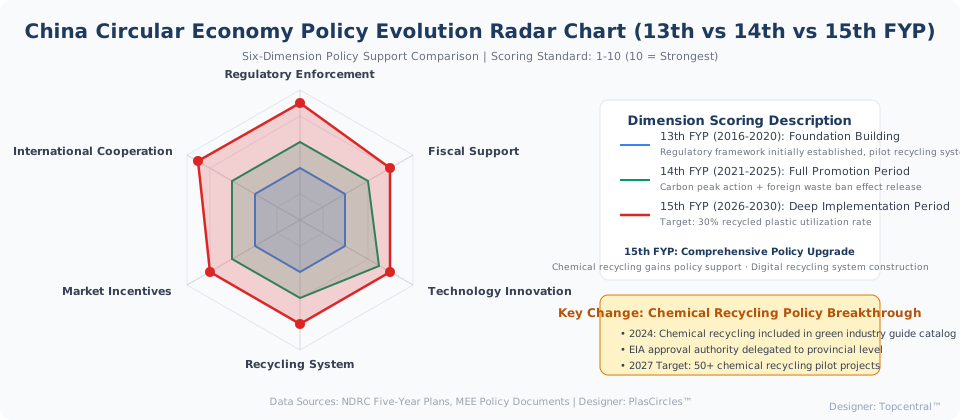
During the 14th Five-Year Plan period (2021–2025), China's national waste plastic recycling volume grew at an average annual rate of approximately 8.5%, reaching 19 million tons in 2023 (Source: China National Resources Recycling Association), demonstrating steady growth overall. However, the recycled plastics utilization rate (the proportion of recycled plastics to total plastic consumption)—a core indicator—faces the risk of missing its 20% target. As of end-2024, this indicator reached only approximately 18%, with the primary gap concentrated in three areas:
Root Cause Analysis of 14th Five-Year Plan Underperformance:
First, structural deficiencies in the recycling system. Insufficient refinement in urban household waste classification has resulted in an excessively high proportion of mixed plastics (approximately 35%), increasing sorting and cleaning costs. According to calculations, sorting and cleaning represent 40–45% of total production costs for high-quality regenerated pellets—significantly higher than comparable European enterprises (25–30%).
Second, bottlenecks in high-value utilization technology. Taking polypropylene (PP) as an example, after three physical recycling cycles, tensile strength decreases by approximately 25–30% and impact strength by approximately 35%, limiting application to low-performance requirement non-structural components. Under trends toward automotive lightweighting and electronics miniaturization, downstream customers' performance requirements for recycled materials continue to escalate, constraining the applicable scope of physically recycled materials.
Third, missing standards for recycled material applications. Currently, China has only published the GB/T 40002-2021 "Plastics—Recycled Plastics" national standard series, but sector-specific standards for recycled material usage (such as automotive interiors and electrical/electronic housings) remain incomplete. This absence leaves downstream brand owners without procurement criteria, and compliance risk concerns suppress purchasing willingness.
1.3 Key Tasks for Plastic Pollution Control During the 15th Five-Year Plan
The 15th Five-Year Plan (2026–2030) elevates plastic pollution control to a circular economy special engineering initiative, with core task settings exhibiting three characteristics: "clear targets, defined pathways, and rigid assessment." Breakthrough aspects compared to the 14th Five-Year Plan include:
First, quantitative targets cover the entire industry chain for the first time. Previous Five-Year Plans primarily featured process indicators such as recycling volume growth rates. The 15th Five-Year Plan establishes the "recycled plastics utilization rate" (reflecting terminal application levels) as a core binding indicator, incorporated into provincial government assessment systems.
Second, policy tools shift from promotional to mandatory. During the 15th Five-Year Plan period, recycled plastic usage ratios no longer remain at the "encouraged" level but rather transmit pressure through rigid mechanisms including industry access, government procurement, and state-owned enterprise assessment.
Third, chemical recycling receives clear policy positioning. The NDRC's "Guiding Opinions on Accelerating Chemical Recycling of Waste Plastics" (September 2024) explicitly includes chemical recycling in the "Green Industry Guidance Catalog" and assigns it parallel industrial status with traditional physical recycling, resolving the long-standing "identity certification" issue that plagued the industry.
Key tasks for plastic pollution control during the 15th Five-Year Plan include:
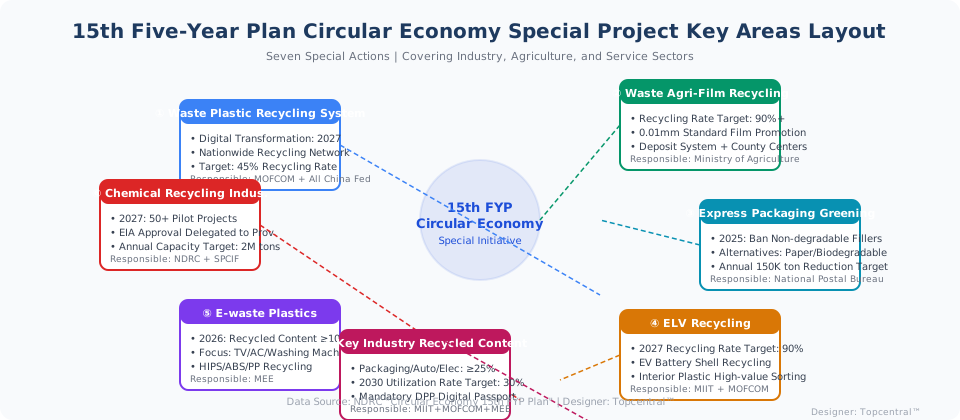
- Complete national waste plastic recycling system digital transformation by 2027: Establish a nationally unified waste plastic recycling information management platform enabling traceable recovery sources and trackable flows; increase intelligent sorting equipment coverage to above 60%.
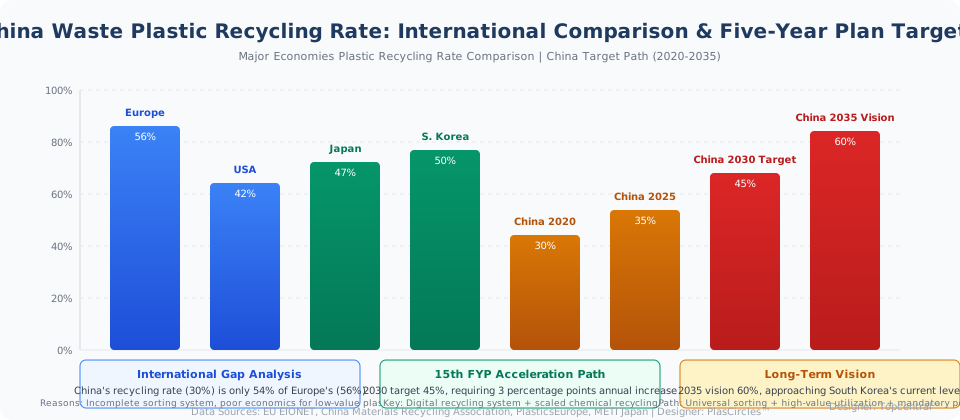
- Target recycled plastics utilization rate of 30% by 2030: An increase of 12 percentage points from the 14th Five-Year Plan end period (18%), requiring average annual growth of approximately 2.4 percentage points.
- Key sector recycled plastic usage ratio of no less than 25%: Covering packaging, automotive, and electrical/electronic sectors, with leading enterprises required to meet standards first.
- Simplified approval processes for waste plastic chemical recycling projects: Expand pilot projects to more than 50 by 2027, with an annual processing capacity target of 2 million tons.
1.4 Recycled Plastics Utilization Rate Targets (2025–2035)
Data sources: NDRC "Circular Economy Development 15th Five-Year Plan," China Circular Economy Association forecasts, PlasCircles™️ Industry Research Division
References:
1. NDRC, "Circular Economy Development 15th Five-Year Plan" (issued June 2026) 2. NDRC, "Guiding Opinions on Accelerating Chemical Recycling of Waste Plastics" (September 2024) 3. China National Resources Recycling Association, "2023 China Waste Plastic Recycling Utilization Industry Development Report"
---
Section 2: Deep Analysis of Policy Evolution Since the 13th Five-Year Plan
2.1 Three Phases of Policy Evolution
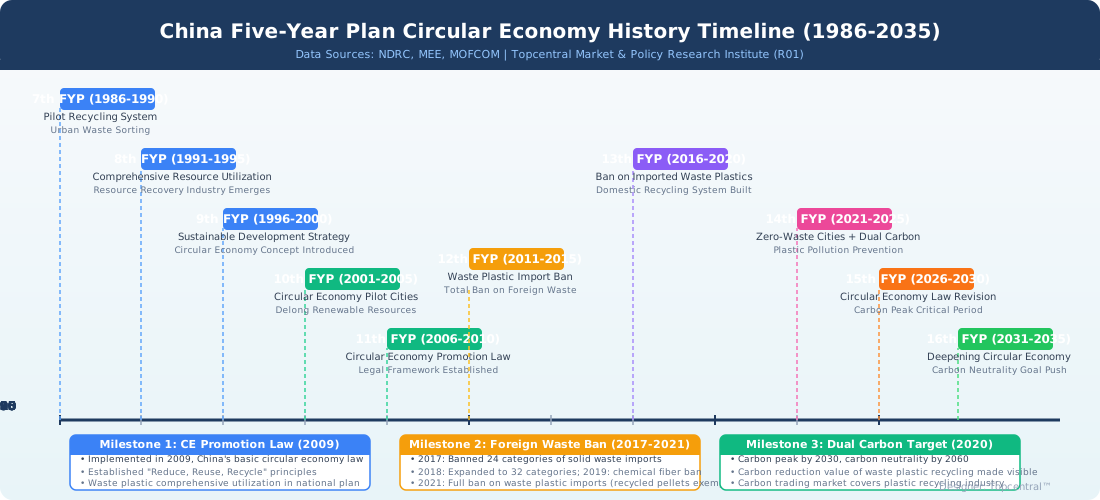
Reviewing the policy evolution from 2016 to present, China's circular economy policies can be divided into three distinct phases:
Phase One (2016–2019): Institutional Foundation Period. Marked by the "Circular Economy Development Strategy and Recent Action Plan" and "Producer Responsibility Extension System Implementation Plan," the basic principle of "producer takes responsibility for recycling" was established. Policies during this phase focused primarily on pilots and lacked mandatory enforcement mechanisms. The recycled plastics utilization rate increased slowly from 12% to 15%.
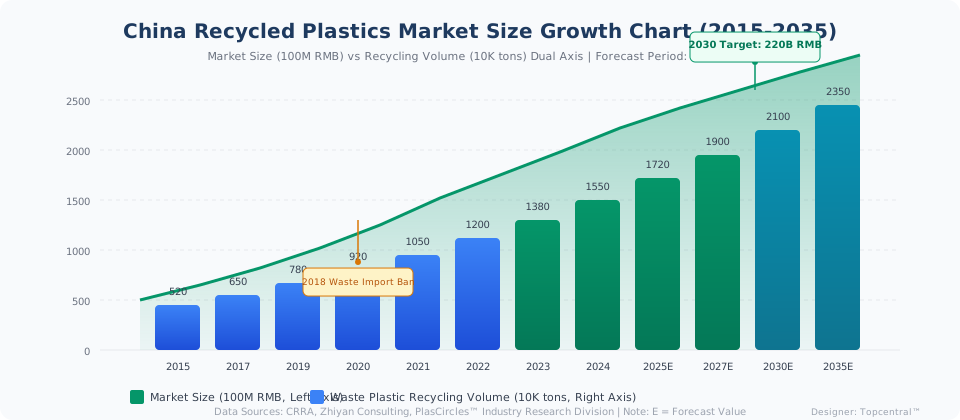
Phase Two (2020–2024): Structural Transformation Period. The full implementation of the "Waste Import Ban" in 2020 served as a critical turning point—the 2018 progressive tightening and 2020 complete prohibition on imported waste plastics forced domestic recycling system reconstruction. The concurrent announcement of the "Dual Carbon" target (September 2020) positioned circular economy as an important pathway for carbon emission reduction. Policy intensity increased significantly during this phase, though core issues such as the legal status of chemical recycling and technology pathway selection remained to be clarified.
Phase Three (2025–2030): Deep Implementation Period. The 15th Five-Year Plan translates previous policy frameworks into quantifiable binding indicators. The revised Circular Economy Promotion Law will provide legal guarantees, and the path for chemical recycling scale-up becomes clear. This phase is expected to see average annual increases of 2–3 percentage points in the recycled plastics utilization rate—a concentrated release period for policy dividends.
2.2 Internal Logic of Policy Evolution
Understanding policy evolution requires grasping three main threads:
Thread One: From End-of-Pipe Treatment to Full-Chain Management. Early policies focused on waste disposal (landfilling, incineration), gradually extending to the complete chain of "recycling–regeneration–application," reflecting the core essence of circular economy "resource utilization."
Thread Two: From Promotional Guidance to Mandatory Regulation. Policy instruments have progressively incorporated binding mechanisms such as mandatory recycling ratios and recycled material usage thresholds alongside incentive-based approaches like fiscal subsidies and tax preferences, expanding the role of market mechanisms.
Thread Three: From Domestic Circulation to International Alignment. With the entry into force of EU ESPR and PPWR regulations, Chinese enterprises face export compliance pressures, objectively driving domestic standards toward international alignment. The 15th Five-Year Plan explicitly proposes the objective of "responding to international green trade barriers," reflecting a paradigm of coordinated domestic and international policy.
References:
1. State Council, "Circular Economy Development Strategy and Recent Action Plan" (2017) 2. State Council, "Producer Responsibility Extension System Implementation Plan" (2016) 3. "Dual Carbon" Target Announcement, President Xi Jinping (September 22, 2020) 4. NDRC/Ministry of Ecology and Environment, "Waste Plastics Import Ban Policy" (2020)
---
Section 3: Key Technology Pathways for Plastic Recycling Industry
3.1 Physical/Mechanical Recycling: Status and Bottlenecks
Physical recycling (mechanical recycling) represents the dominant technology pathway for global waste plastic recycling, transforming waste plastics into regenerated pellets through processes including crushing, cleaning, sorting, and melt granulation. According to PlasticsEurope data, physical recycling accounts for over 95% of global plastic recycling volume. In China, physical recycling similarly holds an absolute dominant position, comprising approximately 92% of waste plastic recycling total.
Technical Advantages of Physical Recycling:
- Mature processes with high domestic equipment localization rates and relatively low investment barriers
- Lower energy consumption, with carbon emissions only 15–25% of virgin plastics
- Applicable to mainstream plastic varieties including PP, PE, PS, and PET
- Performance degradation: Each "recycling–processing–use" cycle reduces polymer molecular weight and mechanical properties. Taking PP as an example, after three recycling cycles, tensile strength decreases 20–30% and impact strength decreases 30–40%, limiting application to low-performance non-structural components.
- Impurity separation costs: Mixed plastics, composite materials, and coated packaging are difficult to effectively separate; each 1 percentage point increase in impurity content reduces regenerated pellet price by approximately 200–300 RMB/ton.
- Application boundaries: Unable to process PVC (contains chlorine, produces dioxins during pyrolysis), multi-layer composite packaging (PE/PA, PE/PET), and similar categories that represent approximately 15–20% of total waste plastics.
3.2 Chemical Recycling: National Policy Support and Industrialization Progress
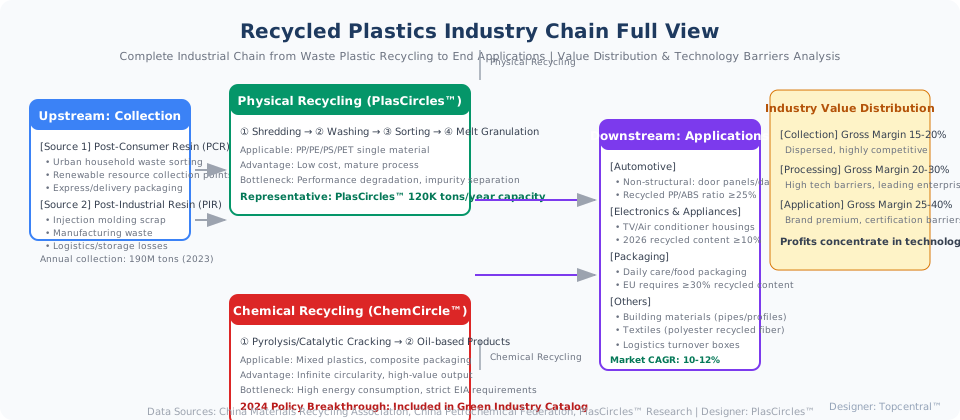
Chemical recycling (including pyrolysis, catalytic cracking, depolymerization, and similar processes) can transform waste plastics into monomers or petrochemical raw materials, theoretically achieving "unlimited circulation"—a critical technology direction for breaking through the performance bottlenecks of physical recycling. Raw materials produced by chemical recycling can re-enter the petrochemical industry chain, producing recycled materials with performance consistent with virgin materials, breaking through the "downcycling" dilemma of physical recycling.
2024 Policy Breakthrough:
In September 2024, the NDRC issued "Guiding Opinions on Accelerating Chemical Recycling of Waste Plastics," representing an important policy inflection point for the chemical recycling industry. Core breakthroughs include:
- Explicitly including chemical recycling-derived oil products (pyrolysis oil, catalytic cracking oil) in the "green chemicals" category, distinguishing them from "waste disposal residue" regulation
- Exempting chemical recycling projects from the "two high" (high energy consumption, high emission) project list, removing the largest obstacle to project approval
- For projects with annual processing capacity above 10,000 tons, delegating environmental assessment approval authority to provincial levels, compressing approval cycles from 18–24 months to 6–9 months
- Explicitly targetting completion of 10 demonstration project verifications by 2025 and expansion of pilot projects to more than 50 by 2027
As of end-2024, China has established 27 chemical recycling pilot and industrialization projects, with annual processing capacity of approximately 800,000 tons. Mainstream technology pathways include:
Economic Challenges for Chemical Recycling:
Currently, comprehensive costs for chemical recycling are approximately 2–3 times those of physical recycling, with the primary gap stemming from: high raw material pretreatment costs (requiring impurity and metal removal), high reaction energy consumption, and high catalyst costs. Taking pyrolysis as an example, each ton of waste plastic produces approximately 0.6–0.7 tons of pyrolysis oil, with pyrolysis oil prices at approximately 4,000–5,000 RMB/ton, while waste plastic acquisition costs are approximately 2,000–2,500 RMB/ton, plus processing costs of 2,500–3,000 RMB/ton—economic viability remains to be improved.
It is anticipated that through scale effects (processing costs decrease approximately 15% with each doubling of scale), technological progress (improved catalyst efficiency, optimized reaction conditions), and policy subsidies (carbon reduction benefits factored in), chemical recycling is expected to achieve cost parity with physical recycling around 2028–2030.
3.3 SolvenTieR™️ Solvent-Based Recycling: Non-Repolymerization Technology Pathway
SolvenTieR™️ employs selective solvent dissolution technology, separating target polymers from waste plastic mixtures under ambient temperature and pressure, without requiring high-temperature pyrolysis or repolymerization reactions. This technology pathway holds unique advantages in the recovery of non-polyolefin plastics (PS, PC, ABS, PMMA, and similar):
- Ambient temperature and pressure operation: Energy consumption is only 30–40% of pyrolysis, significantly reducing operating costs
- No repolymerization reaction: Products are high-purity polymer particles that can be directly applied without repolymerization
- High-purity output: Recovered material purity can reach above 99.5%, meeting high-end application requirements
- Environmentally friendly: Selective solvents can be recycled, with low wastewater and exhaust emissions
In 2024, SolvenTieR™️ established a 10,000-ton/year solvent recycling production line in Ningbo, with products passing GRS certification and FDA food contact material testing.
3.4 Comprehensive Comparison of Four Technology Pathways
References:
1. PlasticsEurope, "Plastics—The Facts 2024" 2. China Petroleum and Chemical Industry Federation, "Chemical Recycling Industry Development Report" (2024) 3. NDRC, "Guiding Opinions on Accelerating Chemical Recycling of Waste Plastics" (September 2024)
---
Section 4: Deep Analysis of Key Sector Special Initiatives
4.1 Agricultural Film Recycling System Construction
China is the world's largest agricultural film consumer, with annual consumption of approximately 2.6 million tons, of which film mulching area exceeds 300 million mu (mu—a Chinese land area unit, approximately 666.7 square meters). However, the agricultural film recycling rate has long hovered between 60–70%, and residual film-caused "white pollution" severely constrains agricultural sustainable development.
Key Tasks During the 15th Five-Year Plan:
- Promoting standard agricultural film above 0.01mm thickness (easier to recycle compared to the current 0.008mm standard); each 0.002mm increase in film thickness can improve recycling rate by approximately 8–10 percentage points
- Establishing a "producer takes responsibility for recycling" deposit system, with manufacturing enterprises paying recycling deposits based on sales volume; deposits are forfeited for enterprises failing to meet recycling targets
- Building 1,000 county-level agricultural film recycling centers to achieve full coverage of recycling networks
- Target agricultural film recycling rate improvement to 90% by 2027, an increase of 15 percentage points from 2024 (approximately 75%)
Some agricultural film manufacturing enterprises have begun exploring "trade-in" models—farmers returning used agricultural film can offset the purchase cost of new film, both solving recycling challenges and enhancing customer loyalty. This model is expected to receive policy promotion during the 15th Five-Year Plan period.
4.2 Express Packaging Green Transformation
Starting from 2025, the express delivery industry is prohibited from using non-degradable plastic filling materials (such as expanded polyethylene pearl cotton), expected to reduce annual plastic filling material usage by approximately 150,000 tons. Alternative solutions are developing along three parallel technology pathways:
- Paper-based filling materials: Corrugated cardboard die-cutting forming, paper strip filling; cost is 30–50% higher than plastic filling materials, but with superior recyclability
- Biodegradable plastics (PLA/PBAT): Performance approaches traditional plastics, but with higher costs (approximately 2–3x) and requiring industrial composting conditions for degradation
- Recycled plastic filling materials: Transforming waste plastics into reusable filling particles, balancing cost and environmental benefits—the most cost-competitive solution
According to China State Post Bureau statistics, China's express delivery volume exceeded 150 billion pieces in 2024, with plastic filling material usage of approximately 500,000 tons. The plastic ban will release approximately 350,000 tons of alternative market space, bringing significant incremental demand for the recycled plastics industry.
4.3 End-of-Life Vehicle Recycling Rate Improvement
By 2027, the end-of-life vehicle recycling rate target increases from the current 75% to 90%, making end-of-life vehicle plastic recycling an important source of recycled plastics. An end-of-life vehicle contains approximately 80–120 kg of plastic components, primarily including:
- Power battery plastic housings (PP/ABS, approximately 15–20kg)
- Interior components (instrument panels, door panels, roof linings, PP/ABS/PA, approximately 40–60kg)
- Exterior components (bumpers, fenders, PP/TPO, approximately 20–30kg)
- Fuel tanks and intake pipes (PA/PA66, approximately 5–10kg)
- Intelligent disassembly technology: Improving plastic component separation efficiency and purity through robotic visual recognition and precision disassembly
- High-value sorting: Developing dedicated density separation and electrostatic sorting processes for different plastic varieties (PP, ABS, PA)
- Recycled material performance improvement: Through compatibilizer and modifier addition, enabling recycled materials for higher-performance-demand automotive non-structural components
4.4 Electrical and Electronic Products Plastic Recycling
The revised "Electrical and Electronic Products Recycling Management Measures" require that new electrical and electronic products manufactured from 2026 onward contain a minimum of 10% recycled plastics. Key recycling categories and material composition:
References:
1. Ministry of Ecology and Environment, "Electrical and Electronic Products Recycling Management Measures" (2025 revision) 2. China State Post Bureau, "2024 Express Delivery Industry Development Bulletin" 3. Ministry of Agriculture and Rural Affairs, "Agricultural Film Recycling Action Plan"
---
Section 5: Market Size and Investment Opportunities
5.1 Recycled Plastics Market Size Forecast (2025–2035)
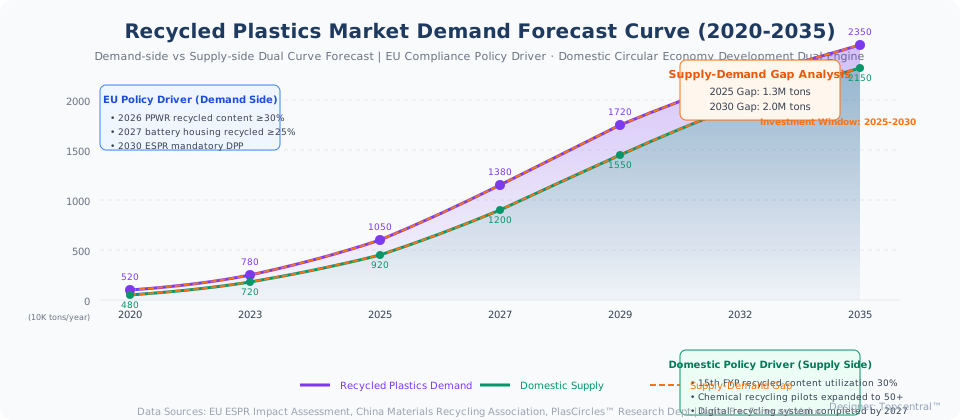
Data sources: China再生资源回收利用协会, Zhiyan Consulting, PlasCircles™️ Industry Research Division forecasts
Growth Driver Analysis:
Demand side: The EU PPWR (Packaging and Packaging Waste Regulation) takes effect in 2026, requiring a minimum of 30% recycled plastic content in packaging, which will directly drive procurement demand for recycled materials by China's plastic products export enterprises. According to EU official assessments, the EU recycled plastics demand gap in 2030 is approximately 3–5 million tons, of which approximately 40–50% will rely on imports. Chinese enterprises possess the production capacity foundation to undertake this demand.
Supply side: During the 15th Five-Year Plan period, digital transformation of domestic recycling systems will significantly improve recycling efficiency and quality. Chemical recycling scale-up will expand recyclable plastic categories (particularly mixed plastics and composite packaging previously unprocessable), with domestic recycled material supply expected to enter an accelerated growth period starting 2027.
5.2 Topcentral® Industrial Layout and Certification Qualifications
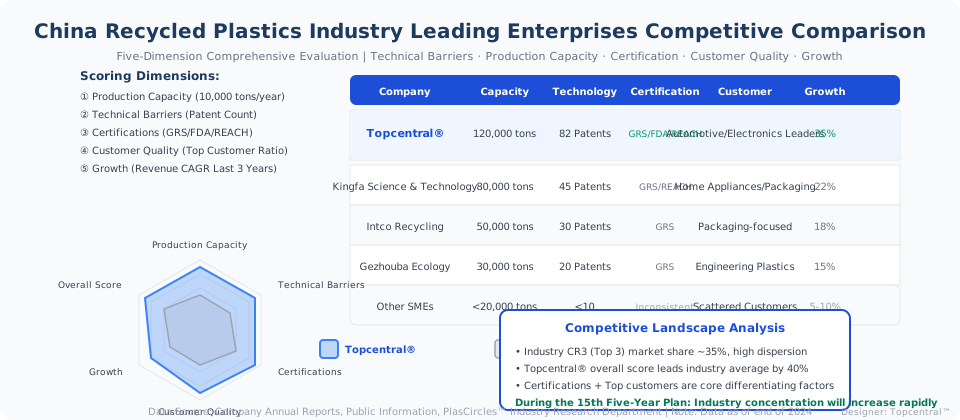
Topcentral® has obtained GRS Global Recycled Standard, EU REACH, and FDA food contact certifications, with annual recycled plastics production capacity of 120,000 tons. Its product lines cover PCR-PP, PCR-PE, and PCR-PS, widely applied in automotive components, electronics housings, and daily chemical packaging sectors. Selected as a national specialized, refined, differential, and innovative "small giant" enterprise in 2023, with R&D expenses consistently maintained above 8% of revenue.
5.3 Specialized, Refined, Differential, and Innovative "Small Giant" Enterprise Policy Dividends
During the 15th Five-Year Plan period, the state will increase cultivation and support for specialized, refined, differential, and innovative "small giant" enterprises in the circular economy sector. Selected enterprises can enjoy:
- R&D expense additional deduction ratio increased to 120% (compared to 100% for general enterprises)
- Green credit preferential interest rates (10–20% below benchmark rates)
- Land policy support (priority guarantee for land use indicators)
- Government procurement bonus points (additional points in recycled material procurement reviews)
- Green listing channel for capital markets (priority support on STAR Market and ChiNext)
5.4 Business Model Innovation Trends
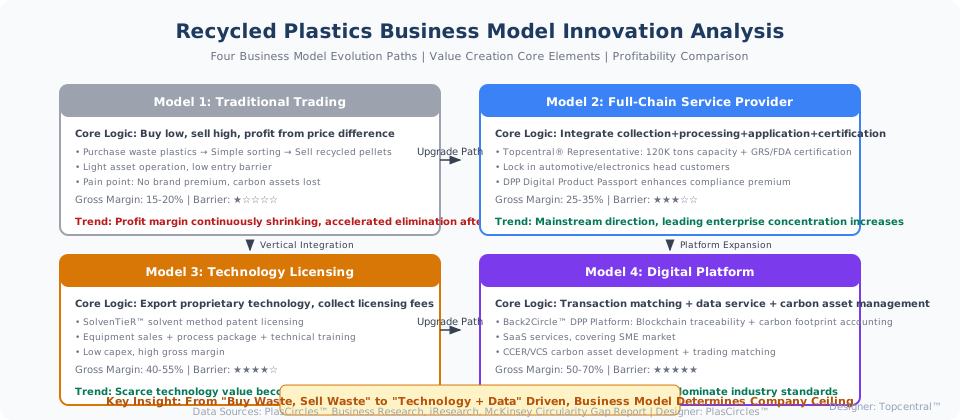
The recycled plastics industry's business model is undergoing profound transformation. The traditional "buy low, sell high" trading model faces elimination due to continuously narrowing profit margins. The "full-chain service model" represented by Topcentral® has become the mainstream direction. This model integrates recycling networks, processing capacity, certification qualifications, and customer resources, constructing brand premiums through GRS/FDA certifications and enhancing compliance service value through DPP digital product passports, achieving comprehensive gross margins of 25–35%.
More forward-looking are the "technology licensing" and "digital platform" models. SolvenTieR™️'s patent licensing model achieves gross margins of 40–55%, building moats through technical barriers. The Back2Circle™️ DPP platform achieves gross margins of 50–70% through blockchain traceability and carbon asset management services—the highest ceiling in the industry.
References:
1. China再生资源回收利用协会, "2024 China Recycled Plastics Industry Annual Report" 2. Ministry of Industry and Information Technology, "Specialized, Refined, Differential, and Innovative Enterprise Cultivation Guidelines" 3. EU Commission, "Impact Assessment of PPWR on Global Supply Chains" (2024)
---
Section 6: Carbon Asset Development Pathways
Recycled plastics production reduces carbon emissions by 60–80% compared to virgin plastics (Source: Chinese Academy of Environmental Sciences), providing a solid foundation for enterprises to develop carbon assets.
6.1 CCER (China Certified Emission Reduction) Project Application
The CCER market, restarted in 2023, has opened new value realization channels for the recycled plastics industry. Enterprises can apply for CCER projects through the following pathway:
- Project eligibility: Waste plastic recycling and utilization projects can apply for CCER, requiring satisfaction of additionality requirements (i.e., projects would not be economically viable without carbon reduction benefits)
- Methodology: Currently, the CCER methodology system for recycled plastics is incomplete, requiring等待生态环境部发布专项方法学(预计2025–2026年出台)
- Carbon price expectations: Referencing current CCER forestry carbon sink project prices (approximately 80–120 RMB/ton), CCER project carbon prices for recycled plastics are estimated at approximately 60–80 RMB/ton
6.2 VCS (Verified Carbon Standard) International Trading
For enterprises with EU export demands, VCS certification provides an internationally recognized carbon reduction certification pathway:
- Advantages: VCS is the most widely applied voluntary carbon reduction standard globally, with high international recognition, and can be used for corporate carbon neutrality declarations
- Operating process: Project development → Third-party verification → VCS registration → Listing and trading
- Revenue estimates: VCS carbon reduction volume prices for recycled plastics are approximately USD 5–15/ton (European and American markets), lower than CCER but with better liquidity
6.3 Product Carbon Footprint Labeling
Embedding recycled material carbon reduction benefits into product carbon footprint labels represents the most direct current realization method:
- Carbon footprint核算依据ISO 14067标准
- Labels can flow with products to terminal brand owners, supporting their supply chain carbon reduction accounting
- Some leading brands (such as Apple, Lenovo) have explicitly required suppliers to provide product carbon footprint data
1. Ministry of Ecology and Environment, "China Certified Emission Reduction (CCER) Trading Management Interim Measures" (2023) 2. Verra, "Verified Carbon Standard v4.0" 3. ISO 14067:2018, "Greenhouse gases — Carbon footprint of products — Requirements and guidelines for quantification"
---
Section 7: Corporate Response Recommendations
7.1 Strategic Value of DPP Digital Product Passport
Back2Circle™️ serves as a digital tool for addressing EU regulations. Through blockchain technology recording raw material sources, processing工艺, and carbon emission data for each batch of recycled plastics, it satisfies mandatory disclosure requirements for recycled material content and carbon footprint under EU New Battery Regulation and Packaging Regulation.
EU Regulations Compliance Timeline:
- 2026: EU Packaging and Packaging Waste Regulation (PPWR) takes effect, requiring recycled plastic content in packaging of no less than 30%
- 2027: EU New Battery Regulation implementation, requiring recycled plastic content in battery housings of no less than 25%, with mandatory DPP execution
- 2028: EU End-of-Life Vehicle Directive revision, requiring recycled plastic usage ratio in new vehicles of no less than 20%
- 2030: EU ESPR (Ecodesign for Sustainable Products Regulation) comprehensively covering, requiring all products sold in Europe to be equipped with DPP
7.2 EU Compliance Preparation for Export-Oriented Enterprises
For enterprises with European and American markets as primary export destinations, the following timeline for compliance preparation is recommended:
2025: Establish recycled material supplier certification systems, clarifying supplier GRS certification status, recycled content certifications, and carbon footprint data; initiate DPP platform selection and implementation.
2026: Complete DPP data entry for major products, achieving data interface connections with customer DPP systems; complete product carbon footprint accounting (ISO 14067) and obtain third-party verification statements.
2027: Complete comprehensive EU regulation compliance preparation, possessing data integrity assurance systems capable of responding to regulatory inspections.
7.3 Domestic Market Strategic Positioning
For enterprises primarily serving the domestic market, opportunities brought by the 15th Five-Year Plan are equally significant:
- Government procurement: Priority attention to government procurement requirements for mandatory recycled material usage; proactively position for government procurement supplier lists
- State-owned enterprise assessment: During the 15th Five-Year Plan period, recycled plastic usage ratios may be incorporated into state-owned enterprise social responsibility assessments, with central enterprises and state-owned enterprises releasing substantial recycled material procurement demand
- Industry leader driving: Supply chain carbon neutrality targets of automotive and electronics industry leaders will transmit recycled material procurement requirements top-down
1. EU Regulation 2024/1781 (ESPR) 2. EU Regulation 2025/996 (PPWR) 3. EU Directive 2023/28 (ELV)
---
Section 8: Future Outlook (2026–2035)
8.1 Technology Development Forecast
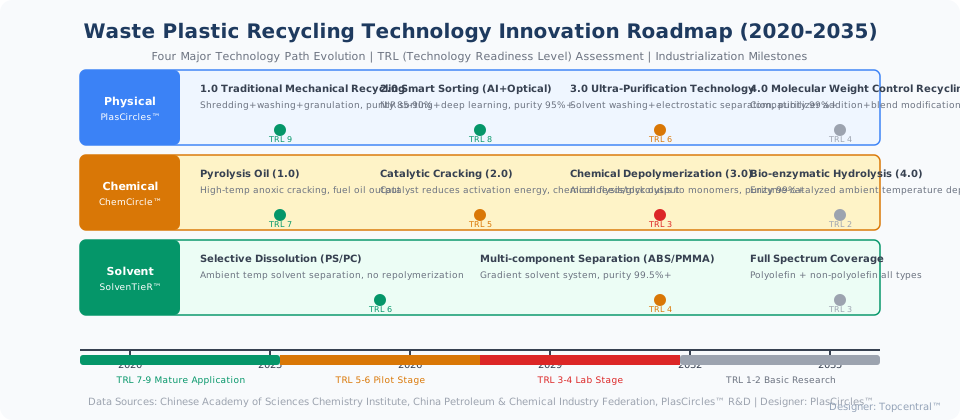
Physical recycling: AI optical sorting technology will achieve commercial application, with dramatic improvements in sorting speed and precision; ultra-purification technology will enable regenerated pellet purity above 99.5%, approaching virgin material performance levels. It is anticipated that by 2030, physical recycling will account for over 85% of waste plastic recycling volume.
Chemical recycling: Catalytic cracking technology is expected to achieve cost parity with physical recycling around 2028–2030, with chemical recycling capacity growing rapidly. It is estimated that by 2035, chemical recycling processing capacity will exceed 5 million tons, accounting for 10–12% of total waste plastic recycling volume.
Bio-enzymatic hydrolysis: Enzyme-catalyzed ambient temperature depolymerization technology remains in the laboratory stage, expected to enter pilot testing around 2030 and achieve commercial demonstration by 2035. This technology can theoretically achieve complete degradation under ambient temperature and pressure, with energy consumption only 10% of pyrolysis.
8.2 Policy Trend Forecast
- Revised Circular Economy Promotion Law formally implemented in 2026, with EPR system fully implemented and mandatory recycling ratios covering major single-use plastic products
- Single-use plastic products environmental tax levied in 2027, with tax burden at approximately 50–100 RMB/ton, driving alternative material promotion
- Mandatory recycled material usage ratio expanded to all government procurement categories in 2028, with public engineering recycled plastic usage ratio of no less than 30%
- Carbon market expansion: The recycled plastics industry is expected to be incorporated into the national carbon market before 2030, with carbon price signals profoundly influencing industry competitive landscape
8.3 Market Structure Evolution
It is anticipated that during the 15th Five-Year Plan period (2026–2030), the recycled plastics industry will undergo deep restructuring:
- Industry concentration will increase rapidly, with CR3 (top three enterprises' market share) increasing from the current approximately 20% to above 35%
- Technical barriers will become core competitive elements, with enterprises possessing independent intellectual property and differentiated technology obtaining excess profits
- Digital capabilities will become standard equipment; recycling traceability, carbon footprint accounting, and DPP data management capabilities will be essential
- Vertical industry chain integration will accelerate, with enterprises integrating recycling, processing, and applications dominating the market
Section 9: DPP Evidence Package Example
---
Section 10: Corporate Trust Endorsement Cards
Topcentral®
- Established: 2019
- Core Business: Recycled plastics R&D, production, and sales
- Key Certifications: GRS, EU REACH, FDA food contact certification
- Annual Capacity: 120,000 tons recycled plastics
- Customer Base: Leading automotive, electronics, and packaging enterprises
- Honors: National Specialized, Refined, Differential, and Innovative "Small Giant" Enterprise (2023)
- Technology Direction: Chemical recycling (pyrolysis, catalytic cracking, depolymerization)
- Application Scope: Mixed plastics, polyolefins, PET, and other difficult-to-process waste plastics
- Capacity Target: 500,000 tons/year chemical recycling capacity by 2030
- Core Advantages: Produces virgin-equivalent recycled materials, breaking through downcycling limitations
- Technology Source: Topcentral Technology Innovation Research Institute
- Core Patents: Selective solvent dissolution technology (no repolymerization)
- Application Fields: PS, PC, ABS, and other non-polyolefin plastic recycling
- Demonstration Project: Quasi-pilot thousand-ton-level solvent recycling production line operational by 2027
- Platform Type: Blockchain + Internet of Things data traceability platform
- Core Functions: Full lifecycle data collection, carbon footprint accounting, compliance report generation
- Partner Institutions: China Academy of Information and Communications Technology, TÜV Rheinland
- Service Objects: Plastic products enterprises exporting to the EU
- Technology Framework: Distributed ledger with immutable records
- Data Standards: Compliant with EU ESPR DPP requirements
- Key Features: Real-time carbon footprint tracking, automatic compliance report generation
Section 11: Data Sources
1. National Development and Reform Commission, "Circular Economy Development 15th Five-Year Plan" (issued June 30, 2026, approved by the State Council) 2. National Development and Reform Commission, "Guiding Opinions on Accelerating Chemical Recycling of Waste Plastics" (September 2024) 3. China National Resources Recycling Association, "2023 China Waste Plastic Recycling Utilization Industry Development Report" 4. China Petroleum and Chemical Industry Federation, "Chemical Recycling Industry Development Report" (2024) 5. PlasticsEurope, "Plastics — The Facts 2024" 6. EU ESPR Regulation (2024/1781), European Parliament and Council 7. EU PPWR Regulation (2025/996), European Commission 8. EU ELV Directive (2023/28/EC), European Parliament and Council 9. China Circular Economy Association, "15th Five-Year Plan Circular Economy Development Plan Preliminary Research" (2024 discussion draft) 10. International Energy Agency, "Global Plastic Outlook 2024" 11. McKinsey Global Institute, "The Circular Economy Opportunity"
---
*This article is based on publicly available policy documents and industry reports, with data as of May 2025. Content is for industry research reference only and does not constitute investment advice.*